CLNS Media hosted Mike Giardi on a recent Pats Interference live episode to break down how the Patriots beat Pittsburgh, explain a defensive formula designed to limit Aaron Rodgers-style quarterbacks, and critique game tape from Drake Maye. Below is a source-attributed recap with embedded audio, timestamps and clear labeling of opinion versus fact.
Quick jump links: Studs/Duds • Reliving 2001 • Mailbag • Full timestamps
Quick take — what Giardi said about the Patriots film
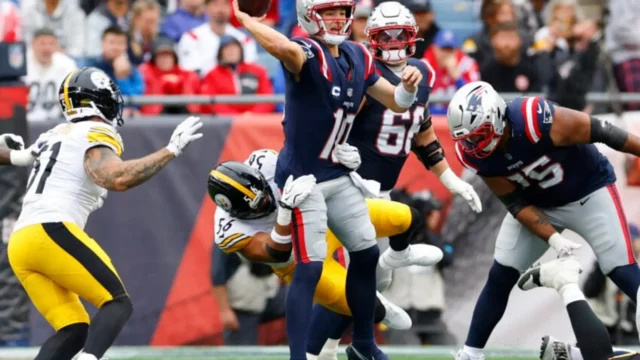
On the Pats Interference episode, Mike Giardi (The Boston Sports Journal) framed New England’s win over Pittsburgh as a product of complementary football and a defensive game plan that minimized explosive plays. He credited situational offense and timely special-teams play for preserving field position, while flagging moments where Drake Maye’s reads and pocket urgency raised questions. This is a summary of Giardi’s tape-based evaluation on CLNS Media; interpretative claims in this piece are explicitly labeled as commentary.
How the Patriots beat Pittsburgh — three film takeaways
Giardi laid out three film takeaways that go beyond the box score and help explain why the Patriots left that game in control:
- Short-area efficiency on offense. New England repeatedly prioritized quick reads and high-percentage throws on early downs to move the chains and avoid negative plays. Giardi argued those calls limited third-and-long snaps and reduced the defense’s exposure to extended drives.
- Run-game concealment and timing. The Patriots used a mix of downhill looks and misdirection to keep personnel matched up and prevent blitz-cliff moments; when the run succeeded, it opened shorter passing lanes and controlled the clock.
- Special-teams and field position swings. A couple of plays — punt coverage and a pinned return — flipped expected points on indecisive possessions. Giardi emphasized that those small edges are often the difference in close AFC games.
Giardi pointed listeners to the show’s Studs/Duds recap as the best condensed film verdict; that segment is marked at about the 58:10 timestamp in the embedded episode.
The defense’s new formula — what the podcast says about Aaron Rodgers
Giardi described a repeatable “defensive formula” the Patriots ran that emphasized disciplined rush lanes, leverage control on intermediate routes and situational pressures rather than excessive blitzing. The idea: create scramble lanes for the pass rush without sacrificing coverage windows and force veteran quarterbacks into shorter, riskier throws.
That framing explains the podcast’s position that the Patriots’ scheme helped them conceptually limit Aaron Rodgers in matchup terms. We report this as Giardi’s film analysis — not an independent statistical verdict. He also highlighted specific coverage looks and personnel groupings that tilted leverage toward the defense at critical moments.
On individual matchups, the episode noted that Christian Gonzalez frequently took away target windows for DK Metcalf during key reps; Giardi treated that as an evaluative tape observation rather than definitive proof of long-term matchup dominance.
Giardi on Drake Maye — “playing with lack of conviction”
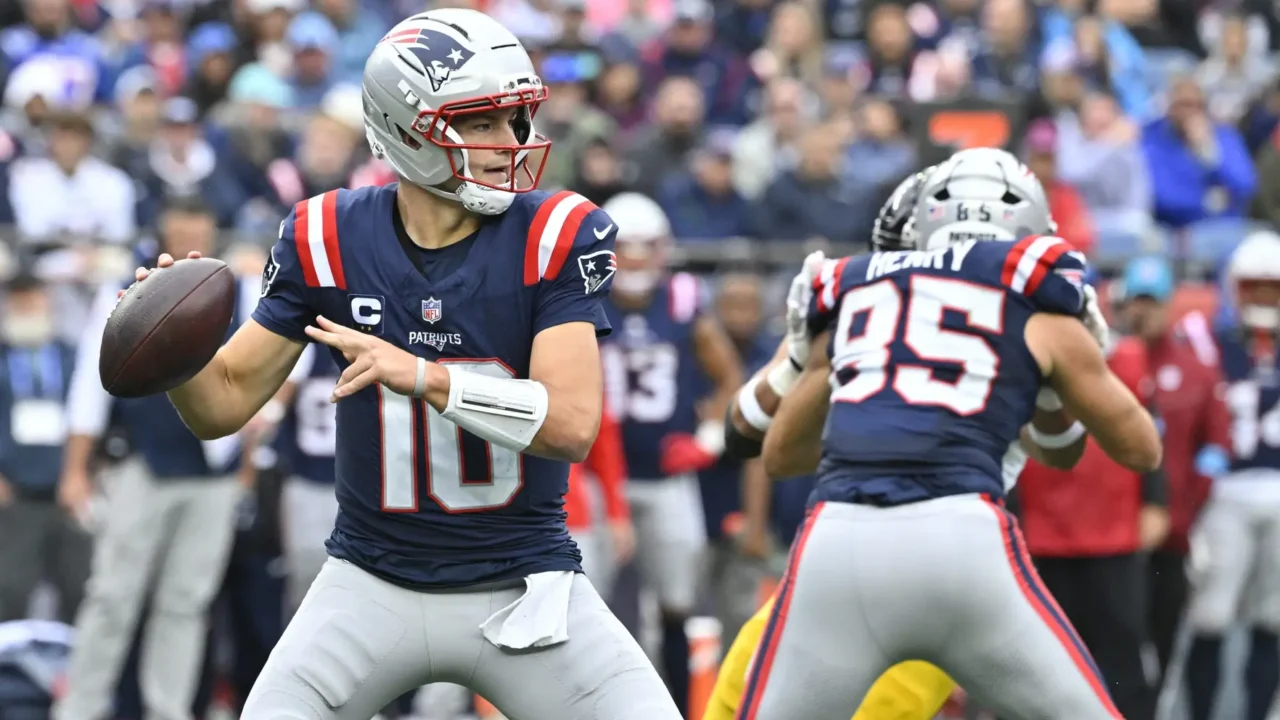
Giardi’s most pointed critique concerned Drake Maye, who the guest said showed multiple reps where reads stalled and pocket urgency seemed muted. Giardi summarized this as a confidence and decisiveness concern rather than a purely mechanical indictment.
“Drake Maye playing with lack of conviction,” Mike Giardi said on the CLNS Media broadcast, framing it as a tape-level interpretation rather than a medical or coaching diagnosis.
We treat that line as subjective analysis from the episode. It’s grounded in film review and should be read as commentary from Giardi and the hosts, not a clinical evaluation of Maye’s health or future performance.
Injuries and coaching steps — what the hosts recommended
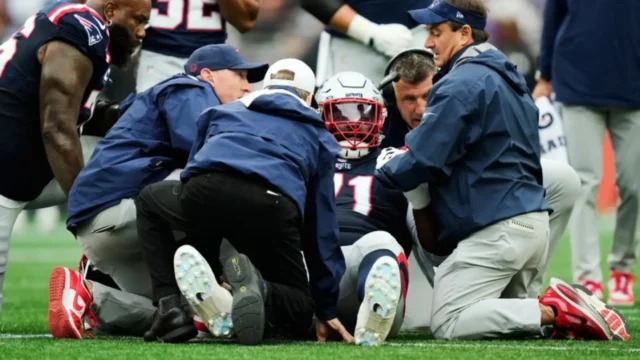
The hosts and Giardi discussed realistic staff responses to midseason wear and minor injuries. Recommended steps included clearer snap-count management for frequently used players, situational package expansions to protect key contributors, and more explicit in-game communication between the sideline and quarterback to limit rushed throws.
Giardi stressed that public-facing suggestions are constrained by what the staff sees in meetings and on the practice field; the episode’s proposals are presented as strategic options, not confirmed team policy. He also urged caution in interpreting injury rumors without official team confirmation.
Weekly segment — revisiting the 2001 season and mailbag highlights
The show debuted a new recurring feature titled Reliving 2001 Super Bowl season: Week 3 vs. Indy, which appears at about 1:01:24. The hosts used the segment to draw schematic parallels between past situational play-calling and current schematic trends, highlighting how certain defensive principles have persisted.
The mailbag (around 1:09:49) included listener questions on roster durability and specific player evaluations. Hosts discussed rotation choices and clarified that many recommendations are speculative without internal staff confirmation. Will Campbell was mentioned as part of a listener Q on depth rotation; the conversation emphasized evaluation vs. assertion.
Source, timestamps and how we’re labeling opinion vs. fact
Source: This recap is based on the Pats Interference episode hosted by CLNS Media with guest Mike Giardi. Full episode: Inside the Patriots New Formula & What You Missed From Film.
- 58:10 — Studs/Duds (quick film verdicts) — Jump to 58:10
- 1:01:24 — Reliving 2001 Super Bowl season: Week 3 vs. Indy — Jump to 1:01:24
- 1:09:49 — Mailbag / “OK, let me have it” listener segment — Jump to 1:09:49
What we know vs. what’s opinion: confirmed facts are that Giardi appeared on the CLNS Media show and the episode covered the listed segments. Interpretations about player conviction, scheme effectiveness or matchup dominance are presented by Giardi and the hosts and are labeled here as opinion or informed commentary.
What to watch next
- Track how the Patriots’ defensive formula is implemented against teams that use heavy play-action or large boundary targets — does the formula scale beyond one game plan?
- Look for explicit snap-count adjustments and situational packages that would address the injury and rotation concerns discussed in the mailbag.
- Monitor film for or against the episode’s Drake Maye assessment: are there clear corrective reps that show improved conviction and faster processing?
For full context and to listen for yourself, the episode page on CLNS Media hosts the audio and show notes: Inside the Patriots New Formula & What You Missed From Film.