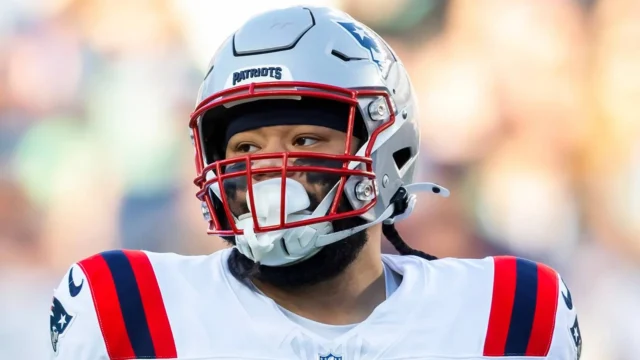
Drake Maye faces a schematic litmus test this week: MusketFire frames the Pittsburgh Steelers’ zone-first approach—centered on Cover 6—as a plan that will press Maye’s pre-snap reads and in-route patience. MusketFire’s piece synthesizes Patriots beat reporting from Evan Lazar and analytics from Next Gen Stats to argue the Steelers’ split-safety shells will specifically target decision-making windows Maye has occasionally struggled to exploit.
Read the MusketFire report for the full breakdown: Steelers’ zone-heavy defense will test a problem Drake Maye’s Patriots haven’t solved.
How Cover 6 works and why zone matters
Cover 6 — often called quarter-quarter-half — is a hybrid split-safety look that blends elements of Cover 2 and Cover 4. One safety handles the boundary side while the other splits responsibilities on the field side with a corner, leaving four underneath defenders to cover intermediate areas.
As a zone defense, Cover 6 seeks to remove the deep vertical shot and funnel quarterbacks toward intermediate windows and underneath routes. That schematic goal increases the value of pre-snap recognition and post-snap patience, and it amplifies the importance of manipulating defenders with motion and route tempo.
Why Drake Maye has shown trouble against zone-heavy looks
MusketFire and Next Gen Stats data cited in the reporting identify a clear pattern: while Maye performed well across many metrics in 2025, his profile against sustained zone concepts was less dominant. Per Next Gen Stats, Maye posted a 103.1 passer rating against zone defenses in 2025 — a useful datum but one that sits below his best results versus man-heavy coverage and blitz packages.
MusketFire points to the Patriots’ Week 15 loss to Buffalo as a concrete example. In that game, Maye threw for just 155 passing yards while adding two rushing touchdowns; the report notes Buffalo leaned on zone concepts in that matchup and MusketFire cites reporting from Evan Lazar for game usage context. The article links that performance to a broader interpretation: opponents can limit Maye’s big-play opportunities by forcing the offense into shorter, higher-volume completions.
That inference is interpretive rather than definitive; MusketFire and analytics sources encourage treating usage rates and passer-rating splits as pattern evidence that warrants watching, not as guaranteed outcomes.
Steelers’ zone tendencies and the staff behind them
Per reporting from Evan Lazar and the MusketFire synthesis, head coach Mike McCarthy and defensive coordinator Patrick Graham have leaned toward zone-heavy shells early in the season, including quarter-quarter-half looks. Evan Lazar noted the team’s Week 1 tendency to play predominantly zone, a trend MusketFire highlights when projecting Pittsburgh’s Week 1-to-now schematic identity.
That staff continuity matters because Graham’s approach can pair heavy zone shells with an effective front, creating a two-way problem: coverage windows narrow while pressure lanes can shorten a quarterback’s time to throw. MusketFire’s framing therefore emphasizes both the coverage concept and its interaction with pass rush personnel.
What to watch in the game: film cues and box-score signals
Concrete indicators that the Steelers are implementing the MusketFire-described plan:
- Pre-snap visuals: two deep safeties split with corners shaded inside — a primary sign of quarter-quarter-half shells.
- Post-snap drops: linebackers and nickel defenders sinking into defined zone drops rather than following receivers in man-match patterns.
- Snap-share metrics: a consistently high zone percentage across defensive snaps, which analysts including Evan Lazar have highlighted in early-season notes.
- Box-score fingerprints: fewer explosive pass plays allowed and lower yards per attempt, signaling an emphasis on clogging vertical routes.
- Rush-versus-drop balance: frequent four-man rushes while maintaining zone coverage — this alignment invites intermediate throws rather than immediate deep shots.
- Next Gen Stats cues: target depth, completion percentage in zone windows, and time-to-throw splits that show whether Maye is being forced into lower-value throws.
What this means for Patriots game-planning
Offensive coordinator Josh McDaniels will likely prioritize schematic replies over personnel changes. Against a zone-first defense, adjustments that help include stressing the seams with complementary route combinations, using motion and play-action to displace second-level defenders, and designing timing throws into zone soft spots.
These are concept and play-calling adjustments rather than roster prescriptions. MusketFire’s thesis suggests New England needs greater patience and more consistent horizontal passing concepts to convert drives against split-safety shells without relying on speculative lineup moves.
Key takeaways
- MusketFire frames the Steelers’ zone-first plan as a schematic test for Drake Maye, especially in split-safety looks like Cover 6.
- Cover 6 aims to remove the deep ball and force intermediate, timing-based decisions.
- Expect New England to respond with route combos, motion, and play-action emphasis; success will hinge on recognition, timing and yards-after-catch opportunities.
Source attribution and uncertainty
This analysis is grounded in the MusketFire piece “Steelers’ zone-heavy defense will test a problem Drake Maye’s Patriots haven’t solved,” which synthesizes reporting from Patriots beat writer Evan Lazar and analytics from Next Gen Stats. MusketFire’s article and the cited analytics provide useful pattern-level evidence; any usage-rate percentages or game-to-game comparisons should be independently verified when possible.
Read the original MusketFire article: Steelers’ zone-heavy defense will test a problem Drake Maye’s Patriots haven’t solved.
Final note on uncertainty
MusketFire and cited analysts present a clear schematic narrative, but on-field variables — coverage frequency, pass rush success and in-game adjustments — will determine actual outcomes. Treat coverage patterns as a meaningful risk vector for Maye rather than a deterministic prediction.
FAQs
- What happened with Drake Maye? MusketFire and Next Gen Stats identify a trend where Maye’s passer rating is lower in sustained zone concepts; the Week 15 Buffalo game is offered as an illustrative example.
- Why does Drake Maye matter? As the Patriots’ starting quarterback, Maye’s ability to process split-safety shells like Cover 6 shapes how effectively New England can generate explosive plays versus zone defenses.
- What happens next? Expect New England to emphasize tempo, motion and intermediate route concepts; the game’s result will depend on how well the offense matches schematic answers to Pittsburgh’s coverage and rush plan.