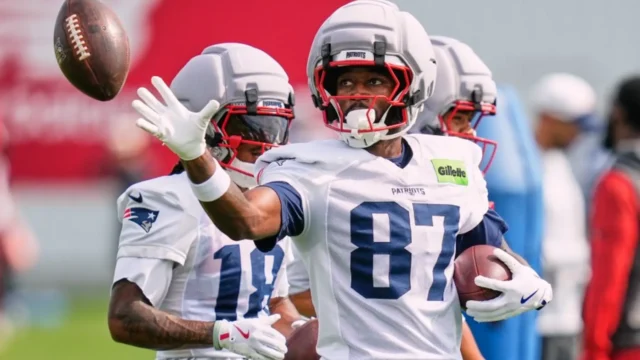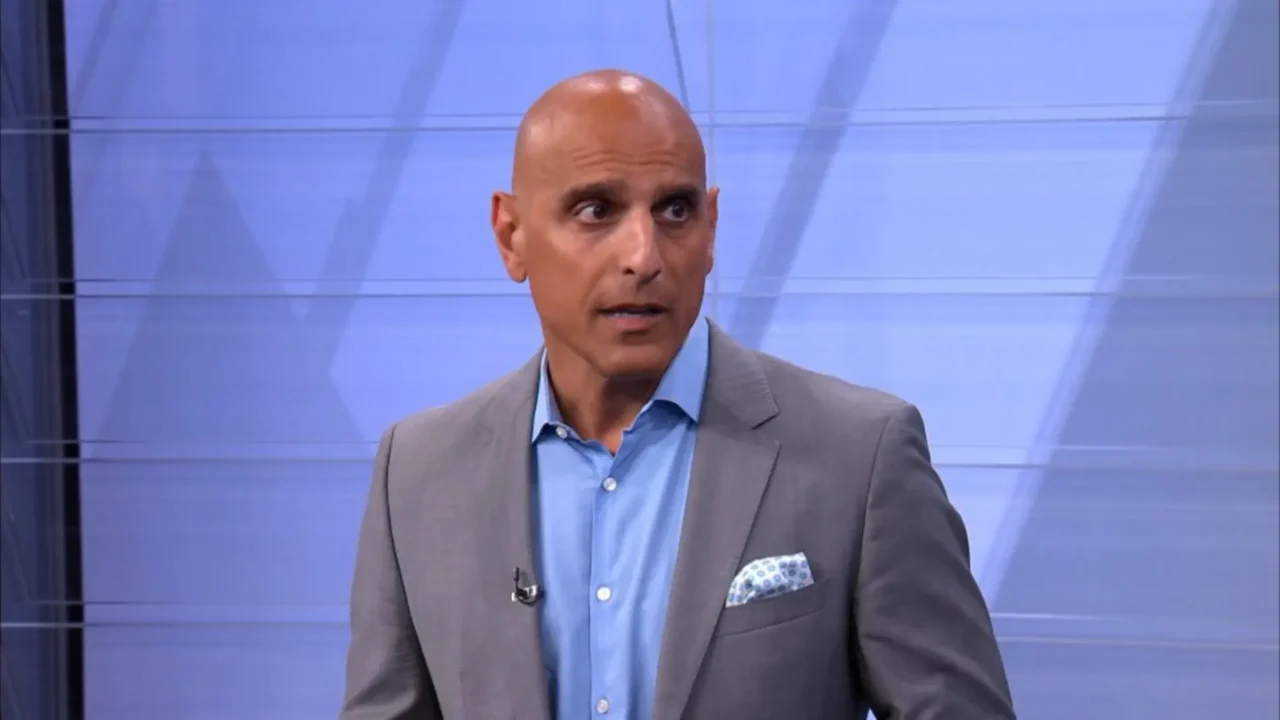
A.J. Brown injury coverage took a clinical turn after Dr. Ron Tabaddor of University Orthopedics joined Sam Knox on WPRI to weigh in. Tabaddor framed the medical picture in conservative terms: he described the injury’s current severity in measured language, mapped out general recovery phases that could apply depending on the diagnosis, and repeatedly emphasized that definitive timelines hinge on imaging and follow-up exams.
A.J. Brown injury: what Dr. Ron Tabaddor said on WPRI
On the WPRI segment, Dr. Ron Tabaddor spoke as an orthopedic consultant interpreting public reports and observed signs rather than delivering a diagnosis based on a personal exam. He made three core points: (1) current public descriptions warrant close evaluation, (2) the range of possible involved structures leads to wide timeline variability, and (3) imaging and serial exams will be decisive.
Tabaddor used cautious qualifiers — “could,” “may,” and “appears” — to underline uncertainty. He noted that some descriptive words used in media reports suggest concern for more than a simple contusion, but he explicitly stopped short of asserting surgery or a season-ending prognosis. That restraint is typical of clinicians who have not had direct access to the player’s exam and imaging.
Medical context: parsing severity, likely recovery phases, and uncertainty
To translate Tabaddor’s on-air language into lay terms, consider these general categories clinicians use when assessing musculoskeletal injuries:
- Minor soft-tissue injury: strains, mild sprains, and contusions often respond to short-term rest, anti-inflammatories, and progressive rehabilitation; timelines are commonly measured in days-to-weeks.
- Moderate injuries: more significant ligament sprains, partial tendon injuries, or complex contusions can require extended rehabilitation and monitoring for stability or function; recovery can span several weeks to months depending on response to treatment.
- Severe structural damage: complete tears, displaced fractures, or injuries involving joint instability sometimes need surgical repair followed by prolonged rehab; timelines extend longer and are individualized.
Tabaddor emphasized that the public wording he read about the situation could align with any of those categories, which is why he advocated waiting for imaging (typically MRI for soft tissue concerns) and a team clinician’s assessment before settling on a timeline. In his remarks he also highlighted typical recovery phases: acute control of pain and swelling, progressive restoration of range of motion and strength, then sport-specific reconditioning and graded return to practice. Each phase’s length depends on the precise tissue involved and how the athlete responds.
Importantly, Tabaddor noted that early optimism or pessimism can change once imaging clarifies whether a ligament, tendon, bone, or mostly soft tissue is affected. That caveat is why he framed his commentary as informed opinion rather than a definitive prognosis.
What this could mean for the Patriots roster in the short term
From a roster-management viewpoint, the immediate priorities are clarity and contingency. The Patriots will lean on their medical staff to refine an accurate diagnosis and then balance rehab timelines with the team’s short-term play-calling and availability needs.
Roster-impact at a glance
- Short-term: expect conservative practice designations and day-to-day monitoring until imaging is complete.
- Depth usage: increased snaps for backup receivers and slot options while Brown’s status is evaluated.
- Play-calling: coaches may adjust target distribution to reduce risk while preserving schematic balance.
For context on why Brown’s availability is meaningful, see the team’s acquisition coverage: Patriots Acquire A.J. Brown. That single internal link provides readers with background about Brown’s arrival and the offensive fit that makes his health immediately relevant to New England’s game plan.
Tabaddor’s stance does not prescribe roster moves; it offers a medical lens the Patriots’ decision-makers will incorporate alongside broader team strategy and opponent scouting.
What remains unclear and the next official milestones to watch
Several discrete updates will materially change how this story evolves. These are the milestones fans and reporters should monitor:
- Official team injury reports and game-day designations released by the Patriots’ medical staff and public-relations channels.
- Any mention of imaging modality and findings (for example, an MRI report or a team statement referencing scan results) that typically clarifies whether conservative care or a surgical consult is required.
- Follow-up evaluations or statements from the team physician or trainers that move commentary from provisional to specific — for instance, clearance for limited practice, full practice, or activation.
As Tabaddor made plain, expert commentary based on media descriptions is useful for framing possibilities but should be treated as provisional until those official data points arrive.
Next steps for fans and reporters
- Monitor the Patriots’ official channels for injury-report updates and any reference to imaging results.
- Expect periodic clarifications from team doctors or trainers; these are the communications that most reliably influence roster decisions.
- Treat initial expert takes like Tabaddor’s as informed interpretation, not final diagnoses; timelines can and often do change as new information appears.
FAQ
What happened with A.J. Brown injury?
Public reports described a notable in-game issue that prompted closer medical evaluation. Dr. Ron Tabaddor of University Orthopedics provided expert commentary on WPRI, framing the situation as one that requires imaging and serial exams to define.
Why does A.J. Brown injury matter?
Brown is a high-impact offensive player; his availability affects target distribution, play design, and defensive game-planning. The offense will adapt while the medical staff clarifies the extent and timeline for recovery.
What happens next?
The key next steps are team imaging, an official medical statement from the Patriots, and follow-up updates on practice participation benchmarks (limited practice, full practice, game activation).
Source attribution
This analysis is explicitly grounded in the expert commentary of Dr. Ron Tabaddor of University Orthopedics as presented on WPRI with Sam Knox. All medical interpretation in this article is attributed to Dr. Tabaddor and University Orthopedics and should be considered professional opinion rather than a definitive diagnosis. Medical assessments can change as imaging and follow-up exams are completed.
Original source: WPRI — Dr. Ron Tabaddor of University Orthopedics offers insight on A.J. Brown injury.
Patriots Report will update this story as official team medical information becomes available.