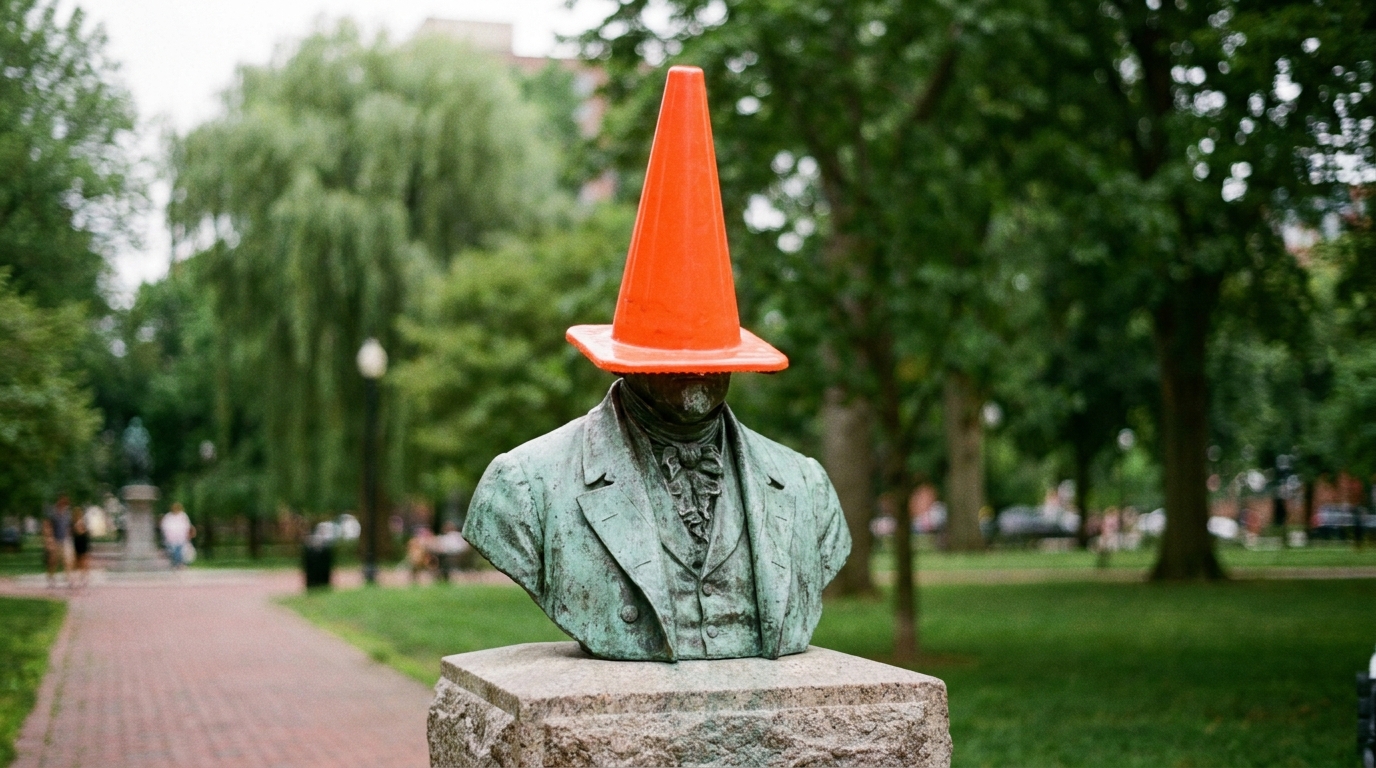
Viral fan moments have taken over social feeds, and one image stands out. The World Cup Scotland traffic cones on Boston statues trend has become a playful symbol of the 2026 celebration. Fans from the Tartan Army brought bright orange cones and big smiles, and their statue hijinks turned into an instant citywide party.
The cone-topping tradition began in Glasgow in the 1980s, but this week it took on new life in Boston. Julian Edelman even helped put a cone on the George Washington statue in the Public Garden, and Rob Gronkowski cheered the Tartan Army for their festive energy. Because the Scots targeted statues of Samuel Adams, Paul Revere, Bill Russell, and Bobby Orr, the stunt felt like a rolling, joyful takeover across the city.
As you read on, expect more fan reaction, viral photos, and community chatter about this quirky ritual. Scotland heads to Miami to face Brazil, and therefore more celebrations could follow. For now, enjoy the lighthearted scenes, the chants, and the sense that this World Cup feels a bit more fun because of one silly traffic cone.
History and Origin: World Cup Scotland traffic cones on Boston statues
The story begins in Glasgow during the 1980s, when fans first put a traffic cone on the Duke of Wellington statue outside the Gallery of Modern Art. Initially it was a cheeky local prank, but therefore it quickly became a symbol of dry Scottish humor. Over time, the cone grew into a living tradition.
- Origin: A single cone appeared in the 1980s on the Duke of Wellington statue in Glasgow. Because the stunt felt humorous and harmless, it stuck.
- Spread across Scotland: Gradually the cone tradition moved from one statue to many. As a result, Scots adopted it as a piece of informal public theater.
- Cultural meaning: For fans, the cone signals camaraderie and playful rebellion. However, it also shows respect for local humor and identity.
When Scotland fans came to Boston for the 2026 World Cup, they brought the ritual with them. The World Cup Scotland traffic cones on Boston statues movement popped up across the city. Fans placed cones on the George Washington statue in the Public Garden and on monuments for Samuel Adams and Paul Revere, among others. Julian Edelman even joined the fun, which amplified the craze on social feeds.
Meanwhile the practice spread into nearby towns like Quincy and Salem. Today the cone tradition mixes heritage with modern fandom. Therefore the cones feel lighthearted, and they connect fans to a shared Scottish past. For now, the cones have become a playful highlight of the 2026 celebrations.
| Statue Name | Location | Historical Significance | Date of Cone Placement |
|---|---|---|---|
| George Washington | Boston Public Garden | First US president; prominent park statue; cone placement went viral with Julian Edelman | June 2026 (reported June 21, 2026) |
| Samuel Adams | Faneuil Hall area | Revolutionary leader and brewer; iconic Boston landmark | June 2026 (reported June 21, 2026) |
| Paul Revere | North End | Revolutionary patriot known for his midnight ride | June 2026 (reported June 21, 2026) |
| Bill Russell | Downtown Boston | Basketball legend and civil rights advocate | June 2026 (reported June 21, 2026) |
| Bobby Orr | Near TD Garden | Hockey icon and local sports hero | June 2026 (reported June 21, 2026) |
| Make Way For Ducklings statues | Boston Public Garden | Beloved children’s book sculptures and family photo spot | June 2026 (reported June 21, 2026) |
Fan Reactions and Community Chatter
Boston filled with noise, color, and laughter as Scotland fans made themselves at home. The Tartan Army arrived in waves, and therefore their energy spread quickly. People gathered at parks, pubs, and squares to watch matches and share moments. As a result, the city’s usual rhythm changed into a festival.
Fans cheered every goal, and they celebrated with playful statue hijinks. The traffic cones atop statues became a running joke. Meanwhile social media exploded with photos of cones on George Washington and the Make Way For Ducklings. Because Julian Edelman helped place a cone, the images went viral across platforms.
“This is the second time in 12 years that the city of Boston has been drank dry.”
Local residents smiled at the good-natured rowdiness. They said the Scots brought warmth and song. Therefore many business owners welcomed the crowd and boosted evening sales. Bars sold out of seats, streets buzzed late into the night, and buskers found new audiences.
“Congratulations to the Scotland army, the Tartan Army, they are absolutely fabulous. They are sloppy, but a respected sloppy fanbase, they’re great people.”
Here are quick takeaways on community impact
- Economic lift: Pubs and shops saw higher traffic and sales during match days.
- Cultural exchange: Fans sang traditional songs and shared snacks with locals.
- Lighthearted mischief: The traffic cones atop statues sparked smiles more than ire.
Public reactions were mostly playful, and therefore officials focused on safety. Some expressed concern about climbing statues, yet many saw the cones as harmless fun. Overall the Tartan Army’s presence boosted community spirit. Because the World Cup unites people, these moments felt like a victory off the pitch.
Conclusion
The World Cup Scotland traffic cones on Boston statues created a memorable blend of humor and heart. Fans turned ordinary monuments into shared moments. As a result, images and chants spread across social media, and the city felt alive with song.
Community spirit rose because the Tartan Army celebrated with respect and loud joy. Local businesses benefited from bigger crowds, and neighbors joined spontaneous singalongs. Meanwhile officials reminded fans to stay safe, and most people treated the cone tradition as playful theater.
These viral moments show how fandom can build connection. The cones linked Glasgow roots to Boston streets, and therefore they became symbols of cultural exchange. Fans returned home with stories, and Boston gained a week of bright color and laughter.
For more fan coverage and highlights, visit Patriots Report LLC. Follow updates and behind the scenes on Twitter at @ZachGatsby. Patriots Report LLC captured the energy and shared it with readers.
In short, the cone antics were more than a prank. They celebrated camaraderie, identity, and the simple joy of cheering together.
Frequently Asked Questions (FAQs)
What are the World Cup Scotland traffic cones on Boston statues?
The phrase refers to a playful fan ritual. Scotland supporters placed bright orange traffic cones on several Boston statues during the 2026 World Cup visit. The stunt echoes a long Scottish tradition of topping statues with cones. Because Julian Edelman participated, images went viral. As a result, the cone placements became a signature moment of the fans’ week in Boston.
Where did this cone-on-statue tradition begin?
The practice began in Glasgow in the 1980s. Fans first put a cone on the Duke of Wellington statue near the Gallery of Modern Art. Over decades, the cone became a symbol of Scottish humor and fan identity. Therefore the Tartan Army brought the ritual to Boston during the World Cup celebration.
Which Boston statues were targeted by fans?
Scotland supporters placed cones on multiple landmarks. Examples include the George Washington statue in the Public Garden, the Make Way For Ducklings sculptures, and monuments to Samuel Adams and Paul Revere. Fans also added cones to statues of Bill Russell and Bobby Orr. Meanwhile the practice spread to nearby towns like Quincy and Salem, and it generated many shareable photos.
Is placing cones on statues safe or legal?
Officials warn about safety and possible damage. Climbing statues can cause slips and harm historic works. However, many locals treated the cone placements as lighthearted mischief. Therefore authorities balanced enforcement with crowd management during busy match days. Fans should respect laws and avoid actions that endanger people or property.
Why do fans do this, and what impact did it have on Boston?
Fans use cone-topping as a form of communal expression. It signals camaraderie, playful rebellion, and shared identity. Local businesses saw higher sales, and public spaces felt lively. As a result, community spirit grew and cultural exchange flourished. Ultimately the cones became a simple, joyful way for the Tartan Army to leave a memorable mark during the World Cup.