
How would AJ Brown Patriots trade reshape the Patriots?
AJ Brown Patriots trade
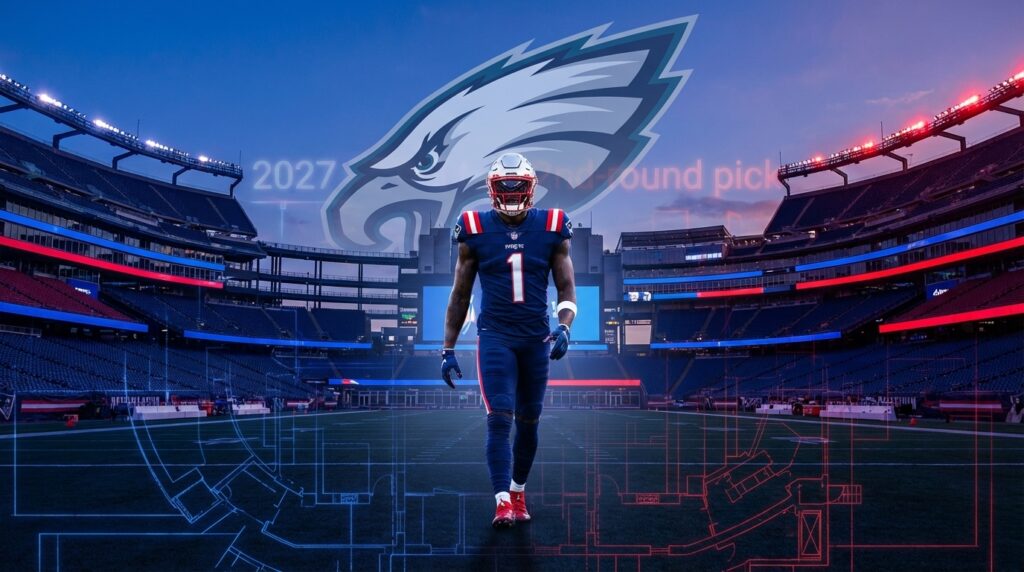
Rumors are flying that an AJ Brown Patriots trade could bring one of the NFL’s top receivers to Foxboro. Fans and insiders have debated scenarios all week, and social timelines filled with potential packages. Because Brown would immediately upgrade the receiving corps, the idea excites Patriots supporters. However, the chatter is equal parts hope and negotiation noise. The proposed framework centers on a 2027 second round pick, and it notably excludes the 2026 Draft from the deal.
As a result, this piece breaks down the cost, context, and likely obstacles if New England pursues Brown. I will examine why the Eagles might hold out for a first round pick, why next year’s draft class matters more than 2026, and how adding Brown would change the team blueprint under Mike Vrabel. Meanwhile, expect plenty of speculation and conflicting takes. Therefore, read on for a rumor-driven analysis that separates plausible trade paths from fanciful wishlist scenarios.

AJ Brown Patriots trade: Proposed Packages
The most circulated proposal to land AJ Brown centers on a 2027 second round pick as the primary asset. Because the 2026 Draft would be excluded, New England would preserve immediate draft capital. However, sources suggest the Eagles still want a first round pick in the return, which raises the price substantially. Meanwhile, Patriots decision makers weigh the upgrade to the receiving corps against long term draft flexibility.
Key terms floated in rumor mills
- 2027 second round pick as the core piece of the offer.
- No 2026 draft picks included in the package.
- Eagles expected to push for at least one first round pick in any serious negotiation.
- Conditional protections or a player swap remain possible add ons in counter offers.
AJ Brown Patriots trade: Costs and Strategic Rationale
Acquiring Brown would change New England’s offense immediately. Brown brings contested catches, separation ability, and proven production. Therefore, the Patriots would bolster their receiving corps and lessen pressure on other targets.
At the same time the valuation gap matters. Next year’s draft class ranks far higher than 2026, which increases the value of a 2027 second rounder. As a result, a single second round pick may not satisfy the Eagles if they prioritize a first rounder.
Practical negotiation points
- Timing matters because the Eagles may hold out until June 1 or later to maximize returns.
- The Patriots might sweeten offers by including mid round picks or a role player.
- If Philadelphia insists on a first round pick, New England must decide between roster upgrade now or a higher pick later.
Why the package makes sense for the Patriots
- Immediate impact: Brown would slot as a top target and open up looks for other receivers.
- Draft preservation: Excluding 2026 picks keeps New England flexible for a better 2027 class.
- Competitive upside: Adding a proven WR shortens the window to contention under a new coaching blueprint.
For context on how the Patriots manage roster priorities and draft strategy, see recent pieces on offensive line targets and receiving depth: offensive line targets and receiving depth and Patriots trade rumors.
Negotiations will depend entirely on the Eagles accepting an offer that balances present value against future draft capital.
AJ Brown Patriots trade: Cost versus Benefit
This table breaks down cost elements and expected benefits. It clarifies trade components and strategic notes.
| Cost Element | Details | Expected Benefit for Patriots | Strategic Notes |
|---|---|---|---|
| 2027 second round pick | 2027 Round 2 pick | Immediate proven wide receiver upgrade; boosts receiving corps | Because the 2027 class is stronger, this pick carries extra value |
| No 2026 draft picks | 2026 draft assets are excluded | Preserves near-term draft capital and roster flexibility | Therefore New England can pursue 2026 needs without trade cost |
| Potential first round demand | Eagles may insist on a first-round pick | Higher long-term draft value but costlier to acquire Brown | If Philadelphia demands a first, Patriots must weigh present versus future |
| Player or mid-round sweeteners | Include a role player or mid-round pick | Helps bridge valuation gap without high draft loss | Meanwhile player swaps can provide immediate depth |
| Conditional protections | Protections or conditional swaps attached | Reduces trade risk and allows renegotiation | Allows pick protections tied to performance or standings |
Use this table as a quick reference when weighing trade scenarios.
AJ Brown Patriots trade: Strategic Implications and Related Rumors
Adding AJ Brown would reshape New England’s offense in clear ways. First, Brown would operate as a primary target on early downs. He would win contested catches and push defensive attention away from other receivers. As a result, the Patriots could open the field for quick passes and deeper shots.
Meanwhile, related rumors about DJ Moore and Jaylen Waddle affect the market. If the Patriots pursued Moore instead, they might pay a similar price. However, Moore brings a different skill set and age profile. Conversely, Waddle discussions highlight how teams value speed and separation. Therefore, Brown sits in a middle ground between contested-catch strength and downfield threat.
Offensive blueprint changes
- Increase in contested catch opportunities for the quarterback.
- Greater threat on intermediate and deep routes.
- Reduced coverage on complementary targets like DJ Moore or Romeo Doubs.
Broader roster effects
- Titans and AFC rivals would adjust coverage schemes accordingly.
- NESN and local media would focus on chemistry with New England’s QB.
- The Patriots might shift resources away from drafting a top receiver in 2027 if Brown arrives.
Risk and reward calculus
The trade would provide immediate upside, yet it carries draft cost. Because next year’s draft class ranks stronger than 2026, a 2027 second round pick has premium value. Therefore, New England must decide between present competitiveness and future flexibility. If Philadelphia insists on a first round pick, the Patriots would face a steeper long term expenditure.
In short, the AJ Brown Patriots trade would not only upgrade the receiving corps. It would also force strategic decisions across roster building, salary planning, and game planning. For fans and front office personnel, the decision hinges on how much value New England places on winning now versus building later.
Conclusion
The AJ Brown Patriots trade saga remains highly speculative, and it will hinge on negotiation details. Because the core offer centers on a 2027 second round pick, New England could gain an immediate receiving corps upgrade without surrendering 2026 picks. However, Philadelphia reportedly values first round compensation, which would raise the cost and alter long term plans.
If the Patriots secure Brown, they would add contested catch ability and route versatility. As a result, opposing defenses would shift coverage, and other receivers would see improved opportunities. Meanwhile, the front office must weigh present competitiveness against future draft flexibility.
For now this story reads like rumor-driven analysis rather than settled fact. Therefore, expect shifting reports and counteroffers as teams prepare for June roster decisions. Patriots Report LLC will continue monitoring talks and offering context. Visit patriotsreport.com for updates, and follow our coverage on Twitter at @ZachGatsby for quick alerts.
What is the AJ Brown Patriots trade currently proposing?
The most discussed framework centers on a 2027 second round pick as the primary asset. The 2026 Draft picks would not be included. However, the Eagles reportedly prefer first round compensation in serious talks.
Which draft picks and assets are involved?
The baseline offer reportedly uses a 2027 second round pick. Teams may add mid round picks or a role player as sweeteners. If Philadelphia demands more, a first round pick becomes part of the conversation.
How would this move affect the Patriots receiving corps?
Acquiring Brown would add contested catch ability and consistent separation. As a result, other receivers would face lighter coverage. Therefore New England would gain a high-impact target for Mike Vrabel’s offense.
What is the realistic timeline for a trade to happen?
Negotiations could stretch through spring and into June. Because teams use June 1 and OTAs for roster clarity, expect decisions around then. Meanwhile public reports and counteroffers will likely shift daily.
What are the main obstacles to completing a deal?
Valuation gap tops the list because the Eagles want premium value. Draft cost versus immediate upgrade creates a clear tradeoff. Ultimately the deal depends on Philadelphia accepting the offer and New England’s willingness to pay the price.