Trade up in 1st round vs trade for A.J. Brown
The Patriots face a defining choice this spring. Trade up in 1st round vs trade for A.J. Brown frames the debate around the 31st pick. The question drives conversations among fans, scouts, and reporters.
On one side, team executives weigh draft capital and the best player available. On the other, the Eagles and A.J. Brown enter the picture as a ready made elite wide receiver. Greg Bedard argues that moving up in round one makes more sense. At the same time, analysts like Nick Cattles and local beat writers stress immediate roster impact.
This article previews an analytical stance that favors drafting up in the first round over trading for Brown. Therefore we will examine draft value charts, cap space realities, and fit with New England schemes. We will also compare A.J. Brown to top prospects such as KC Concepcion, who is on a Top 30 visit with the team.
Additionally we place recent roster moves in context. The signing of James Hudson III and the release of Josh Dobbs reshape need assessments. As a result, this piece balances team need against best player available strategies. Read on for trade scenarios, mock packages, and a clear recommendation for Patriots decision makers.
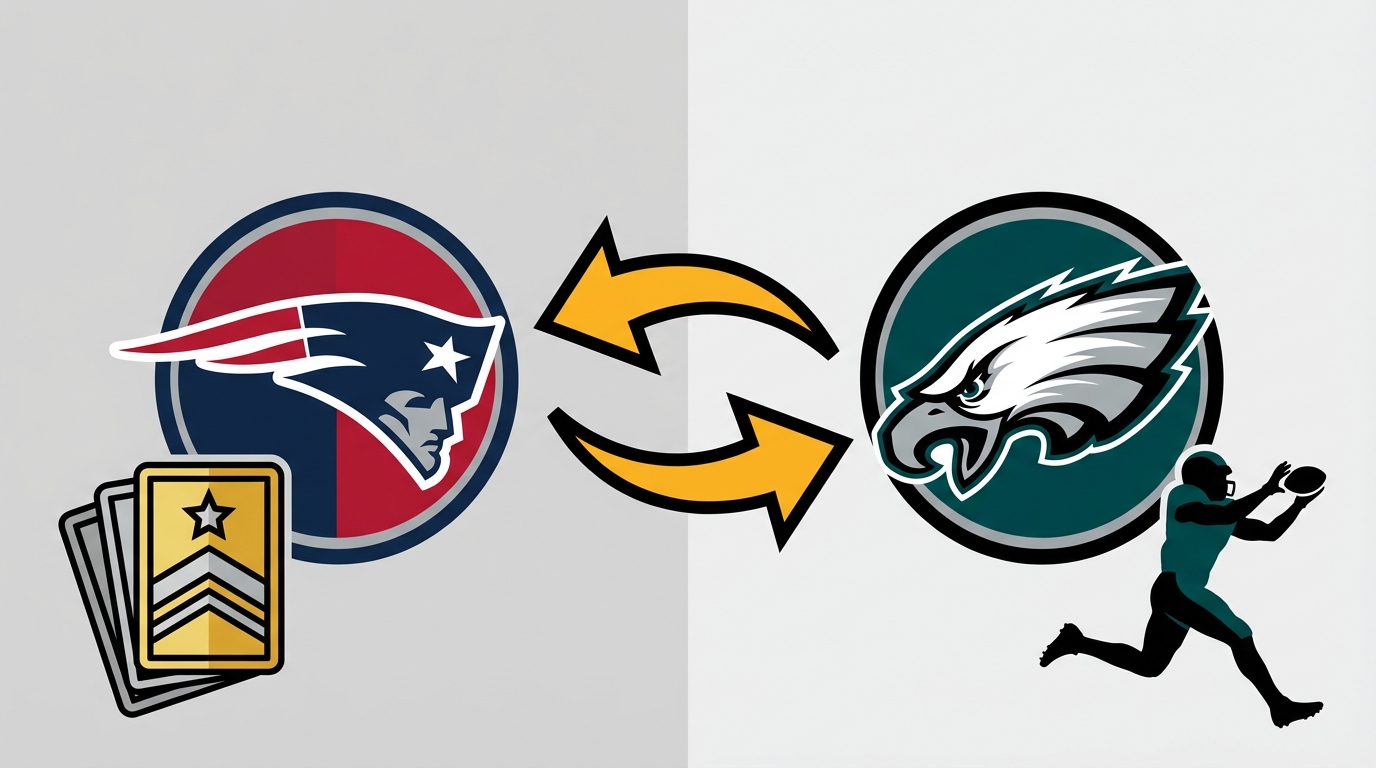
Trade up in 1st round vs trade for A.J. Brown: Draft value and roster fit
Trading draft capital brings clear costs. However, moving up could land a Day One starter or premium prospect. Greg Bedard prefers trading up in round one because it maximizes long term value. Meanwhile, a trade for A.J. Brown buys a proven top tier receiver now.
Consider Patriots needs after recent moves. The club signed James Hudson III and released Josh Dobbs. Therefore, quarterback depth and offensive line depth shifted. Yet the receiving room still lacks a bona fide alpha outside threat. As a result, the temptation to pursue A.J. Brown grows.
Trade up in 1st round vs trade for A.J. Brown: Pros and cons
Pros of trading up for a rookie
- You gain a young starter on a rookie contract, which controls cap costs.
- You can target a position of true need, whether that is WR, edge, or run stopper.
- Draft capital allows flexibility to take the best player available later.
Cons of trading up for a rookie
- You pay steep draft capital for a narrow window to move up.
- Rookies may need time to adapt to the NFL.
- You risk missing an immediate, proven upgrade like A.J. Brown.
Pros of trading for A.J. Brown
- Brown delivers instant top tier production and contested catches.
- He supplies a veteran alpha presence for a young quarterback.
- The Eagles deal could tilt quickly into a Super Bowl window.
Cons of trading for A.J. Brown
- Acquiring Brown requires draft assets and likely salary matching.
- The move limits long term cap flexibility and draft options.
- Brown cannot be restructured to rookie prices.
Experts, prospects, and the best player available debate
Greg Bedard argues for trading up. He prioritizes drafting value and long term upside. Conversely, some local analysts stress immediate wins now.
KC Concepcion sits on a Top 30 visit with the Patriots. Therefore, he represents the sort of WR who could be available early. If New England follows best player available principles, Concepcion or another WR in first 2 rounds might fit.
Key takeaway
- If the Patriots value long term cap control and upside, trade up makes sense.
- If they value an immediate proven alpha, trading for A.J. Brown fits better.
- Given roster moves and cap realities, this analysis leans toward drafting up for controlled upside.
Quick comparison table: Trade up in 1st round vs trade for A.J. Brown
Use this table to weigh costs, roster impact, and long term consequences. However, remember context matters because cap and draft depth vary.
| Factor | Trade up in 1st round | Trade for A.J. Brown |
|---|---|---|
| Cost | Uses draft capital and picks. Therefore cost comes from future flexibility. | Costs include draft assets and likely salary matching. As a result cap space tightens. |
| Impact on team needs | Lets you target a specific need, such as WR, edge, or run stopper. This aligns with best player available or need based plans. | Provides an immediate alpha receiver who fills an outside need now. Meanwhile other holes may remain. |
| Long term value | High upside on a rookie contract. Controls salary for years and preserves draft cycles. | Lower long term value because of veteran salary. It shortens controlled window. |
| Immediate impact | Rookies may take time to produce. However they offer growth and scalability. | Instant production and leadership. Therefore wins may come sooner. |
| Injury and performance risk | Rookie evaluation risk exists, but cost is spread over time. | Veteran injury history and single player variance can change outcomes quickly. |
| Cap flexibility | Improves flexibility due to rookie deals and cheaper salaries. | Reduces flexibility because of veteran pay and potential dead money. |
| Draft flexibility | Keeps future picks in house for trades or depth moves. | Spends draft capital and limits future maneuvering. |
| Expert opinion | Greg Bedard prefers trading up for draft value and long term upside. | Some analysts prefer acquiring a proven playmaker to accelerate competitiveness. |
This table highlights tradeoffs simply and clearly. Therefore decision makers must balance short term gain and long term control.
Draft strategy with the 31st pick: framework and priorities
The Patriots enter draft night with competing priorities. They must weigh trading up, staying put, or packaging picks for veteran help. James Hudson III’s signing and Josh Dobbs’ release change the calculus. Therefore New England has clearer depth on the offensive line and less urgency at journeyman quarterback.
Decisions should balance two core principles. First, target the best player available when clear value exists. Second, address genuine roster holes when the player unlocks immediate improvement. However, those principles often conflict when draft capital is on the table.
If New England trades up: targets and value proposition
- Prefer positions that carry long term value on rookie deals, such as edge rushers and premium wide receivers.
- Target a high ceiling prospect who can start early and anchor a unit.
- Consider KC Concepcion and similar WRs who combine contested catch ability and YAC upside.
Trading up buys control over selection. As a result the Patriots can land a prospect they deem a near-lock. However, they must account for the cost in future picks and flexibility.
WR in the first two rounds: upside and risks
- Selecting a WR in round one or two offers rookie contract value and the chance for homegrown chemistry.
- Rookies may still need time, so immediate production is not guaranteed.
- KC Concepcion on a Top 30 visit represents the type of player who could be a Day One contributor.
Best player available versus team need: practical balancing act
- If the board presents a top-tier talent at 31, draft him and preserve cap space.
- If the Patriots view WR as a priority and a top prospect is available early, trading up can be rational.
- Conversely, buying A.J. Brown would solve the receiver question immediately, but it demands draft assets and veteran salary.
Practical considerations and recommendation
Cap flexibility matters because rookie contracts extend team control. Therefore patience in the draft often yields longer term gains. Given recent moves and roster depth, the smarter path favors trading up to secure controlled upside. That approach aligns with a strategy that prizes best player available, long term value, and sustainable roster building.
CONCLUSION
The debate between trade up in 1st round vs trade for A.J. Brown comes down to control versus immediacy. Trading up buys a young, cost controlled starter. Conversely, trading for Brown supplies instant, proven production.
Our analysis favors trading up. Greg Bedard’s view that draft capital and long term upside matter resonates here. Moreover, recent roster moves matter. Signing James Hudson III improved line depth, and releasing Josh Dobbs lowered short term quarterback urgency. Therefore New England can prioritize long term roster building.
Prospects such as KC Concepcion illustrate why drafting matters. A WR selected in the first two rounds offers rookie scale value and growth with the quarterback. As a result, the Patriots keep cap flexibility and future draft assets when they draft up.
For continuing coverage and trusted perspective, follow Patriots Report LLC at Patriots Report LLC and on Twitter @ZachGatsby. We will track trade chatter, Top 30 visits, and mock packages closely.
Final take: choose controlled upside over a single splash move. That path gives the Patriots the best chance to build sustained success.
Frequently Asked Questions (FAQs)
What is the core debate between trading up in the 1st round and trading for A.J. Brown?
The choice pits control against immediacy. Trading up uses draft capital to secure a rookie on a cheap contract. Conversely, trading for A.J. Brown buys proven elite production now. Teams weigh best player available, team need, cap space, and draft picks when deciding. Draft picks carry team control and cost certainty.
Why might the Patriots prefer to trade up?
Trading up prioritizes long term value and rookie cost control. Greg Bedard favors this approach for its upside. Moreover, a high pick lets New England target WRs, edge rushers, or run stoppers who fit scheme. Therefore the team preserves cap flexibility and future draft assets. It also lets New England build through youth.
What are the main drawbacks of trading for A.J. Brown?
Acquiring Brown requires draft assets and salary matching. Consequently cap flexibility tightens and future picks decline. A veteran acquisition brings instant production but reduces rookie contract years. Also injury and contract risk remain with a veteran. Timing matters for contenders.
How do recent roster moves affect the strategy?
Signing James Hudson III improved offensive line depth. Also releasing Josh Dobbs reduced short term quarterback urgency. Therefore the Patriots can focus more on long term roster building. As a result, drafting up becomes a more logical option.
If the Patriots trade up what targets make sense and why?
Targets include premium WRs and high ceiling edge rushers. KC Concepcion on a Top 30 visit exemplifies a WR who could contribute early. Selecting a WR in rounds one or two offers rookie scale value and chemistry time. However rookies need development, so teams must balance immediate need with growth potential. Development timelines vary by position and situation.