
How will Jaylen Waddle trade reshape Patriots targets?
Jaylen Waddle trade shifts the board for Patriots trade targets
The Jaylen Waddle trade sent shockwaves through the NFL and reshaped the Patriots’ offseason calculus. For Patriots fans, the move changes both who New England can realistically pursue and what they pay. Fantasy football managers should also pay attention because targets and values shifted overnight.
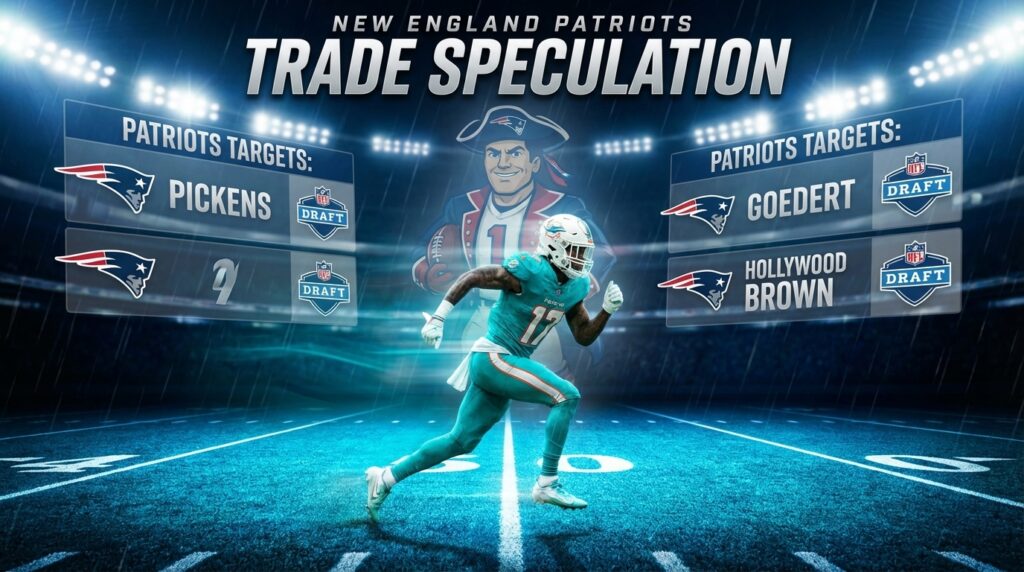
Denver’s acquisition of Waddle plus a draft pick raises the market price for top receivers. As a result, teams with surplus picks now command more leverage. The Patriots hold pick No. 31 and now face new reality when targeting George Pickens or Hollywood Brown. Moreover, cap implications across Miami, Philadelphia, and other clubs affect trade timing and fees.
The remainder of this article breaks down who just became more attainable and who slid down the wishlist. It will analyze pick economics, salary cap maneuvers, and realistic trade fits for New England. For dynasty and redraft players, I will also outline fantasy ramifications and value movers.
Jaylen Waddle trade fallout
The Jaylen Waddle trade fallout immediately reshuffles the Patriots’ trade landscape. Denver landed Waddle and Miami’s 2026 fourth round pick. Meanwhile, Miami gained Denver’s 2026 first round pick No. 30 plus late third and fourth rounders. Because New England holds pick No. 31 in the 2026 draft, the dominoes now fall in specific ways.
Key takeaways for Patriots trade planning
- Draft pick values changed overnight. As a result, a market for top receivers now costs more in picks and compensation. The inclusion of a 2026 first round pick in the Waddle deal signals that teams will demand first round capital for premium pass catchers.
- Patriots draft leverage tightened. New England sits one spot behind Miami’s newly acquired first. Therefore moving around at the end of the first will require more assets or creative packages.
- Cap space and dead money matter more. The Eagles’ standing in dead money complicates any A.J. Brown discussion. If Brown moves before June 1, 2026, Philadelphia would absorb a $43.4 million accelerated 2026 cap charge. However, if they wait until after June 1, the Eagles save about $7 million in immediate cap space.
Viable trade targets after the move
- George Pickens: More attainable but pricier. Teams see receiver value rising, so Pickens may command a first or equivalent pick value. Patriots would need to balance pick No. 31 with additional late picks or players.
- A.J. Brown: A complicated, high-cost swing. Because of heavy dead money and voidable years used in Brown’s deal, any trade involves big cap planning from both sides.
- Hollywood Brown and others: Lower cost alternatives now look more attractive. Hollywood Brown’s $10 million free agent deal shows cheaper fits exist for slot and boundary roles.
What this means for New England
The Waddle trade raises the floor on premium receivers. Therefore New England must weigh draft capital against salary cap flexibility. In short, the Patriots can still pursue upgrades. However, they will likely favor cost efficient moves or creative trades rather than outbidding rivals for top names.
| Target | Pre Waddle trade value | Post Waddle trade value | Estimated draft cost | Cap impact | Notes |
|---|---|---|---|---|---|
| George Pickens | High interest as a first round level receiver | Value increased after Waddle; now likelier to command a late first or first plus assets | Late first or first plus mid rounds; Patriots hold pick No. 31 so they may need additional picks or players | Moderate cap hit for acquiring team; Patriots would add rookie cost or absorb salary in swap | Market for premium receivers rose; teams demand first round capital after the 2026 trade |
| A.J. Brown | Elite WR with heavy trade cost and cap complexity | Even harder and costlier; dead money and accelerated charges complicate moves | Multi firsts or first plus high compensation; unlikely without heavy concessions | Huge immediate cap risk for Eagles if moved before June 1, 2026 with a $43.4 million accelerated charge; moving after June 1 saves about $7 million in immediate space | Howie Roseman used five voidable years; any trade needs cap engineering and timing |
| Dallas Goedert | Valuable TE; seen as a premium tight end target | Relative value stable; less impacted by Waddle but looks more attractive vs expensive WRs | Mid to late first or early second depending on market | Moderate cap hit; more flexible than top WRs | Good schematic fit and cheaper alternative to chasing top receivers |
| Hollywood Brown | Affordable veteran option costing about $10 million | More attainable and cost efficient after Waddle; teams may prefer veteran rentals | Mid rounds to late third | Lower cap impact; fits short term needs | One of the more realistic additions for Patriots given draft and cap constraints |
The Waddle trade pushed up the market for premium pass catchers. Therefore the Patriots may tilt toward cost efficient veterans or tight end targets.
Jaylen Waddle trade ripple effects on other teams
The Jaylen Waddle trade shifted assets and motives across the league. For Denver, the move adds an elite receiver and a short-term boost. Denver receives Waddle and Miami’s 4th-round pick which helps roster depth. As a result, Denver gains immediate scoring firepower.
Miami flipped a first-round pick to acquire draft capital. They received Denver’s 2026 first-round pick No. 30 plus late third and fourth rounders. Therefore, Miami can chase youth or trade again. Because New England holds pick No. 31, this swap directly affects Patriots options near the end of the first round.
Philadelphia faces dead money friction. The Eagles rank seventh in 2026 dead money. If A.J. Brown moves before June 1, 2026, they absorb a $43.4 million accelerated cap charge. However, moving him after June 1 saves about $7 million in immediate cap space. Thus, any Brown trade requires cap timing and Howie Roseman creativity.
The Cowboys and other suitors benefit indirectly. Jerry Jones may leverage the higher receiver market to extract more picks. Conversely, teams tight on cap space will avoid bidding wars. Hollywood Brown’s $10 million deal makes him a realistic lower-cost option. Consequently, New England could target veterans instead of high first-round buys.
Quick team by team effects
- Broncos: Upgrade at receiver; more likely to pay to win now.
- Dolphins: Gained first-round capital; more flexibility to add youth.
- Eagles: Dead money headache; Brown trade timing crucial because of $43.4 million hit.
- Cowboys: Market watcher; could push for picks or players.
- Patriots: Must choose between trading up, trading for veterans, or conserving cap space.
In short, the Waddle trade raised the market for premium pass catchers. Therefore, New England should prefer cost-efficient additions or creative pick swaps.
Conclusion
The Jaylen Waddle trade altered the market for premium pass catchers and tightened New England’s decision space. Because Denver paid first round capital, teams valuing receivers now expect similar returns. Therefore Patriots fans should expect higher asking prices for players like George Pickens and A.J. Brown. However more affordable veterans and tight ends, such as Hollywood Brown or Dallas Goedert, look comparatively attractive.
Cap mechanics and dead money still shape possibilities. For example the Eagles face a $43.4 million accelerated 2026 cap charge if A.J. Brown moves before June 1, 2026, which makes timing critical. As a result the Patriots will likely balance draft pick No. 31 against cap flexibility and roster fit. In short, New England can pursue upgrades, but cost efficient moves and creative pick swaps now look smarter.
For ongoing coverage and trade updates consult Patriots Report LLC. They provide continuous tracking and analysis at patriotsreport.com and on Twitter X via @ZachGatsby. Follow there for the next wave of rumors and any shifts in the Patriots’ trade strategy.
Frequently Asked Questions (FAQs)
What was the Jaylen Waddle trade and why does it matter for the Patriots?
Miami sent Jaylen Waddle to the Broncos for a package that included Denver’s 2026 first round pick and additional compensation. Denver receives Waddle and Miami’s fourth round pick. The swap raised the market value for top receivers, which affects who New England can realistically pursue with pick No. 31.
How did the trade change Patriots draft leverage?
Miami now holds the No. 30 2026 pick while New England sits at No. 31. Therefore moving up or acquiring premium receivers will cost more. Patriots must weigh extra picks or player assets to climb at the end of the first round.
Is A.J. Brown a realistic target after the Waddle trade?
A.J. Brown is complicated. The Eagles sit seventh in 2026 dead money and would absorb a $43.4 million accelerated charge if Brown moves before June 1, 2026. Howie Roseman used five voidable years, so any trade needs precise cap engineering and timing.
Which targets became more attainable for the Patriots?
Affordable veterans and tight ends look better. Hollywood Brown signed a roughly $10 million deal and is a cheaper option. Dallas Goedert offers a lower cap risk than elite receivers. George Pickens remains possible but now commands higher draft capital.
What should fantasy managers and Patriots fans watch next?
Monitor cap moves, draft swaps, and timing on A.J. Brown. The receiver market has risen, so dynasty values can shift. Follow trade timing and Patriots roster moves to update fantasy rankings and redraft priorities.