
What are Patriots trade targets beyond blockbuster names?
Patriots trade targets: 5 realistic options beyond the blockbuster names
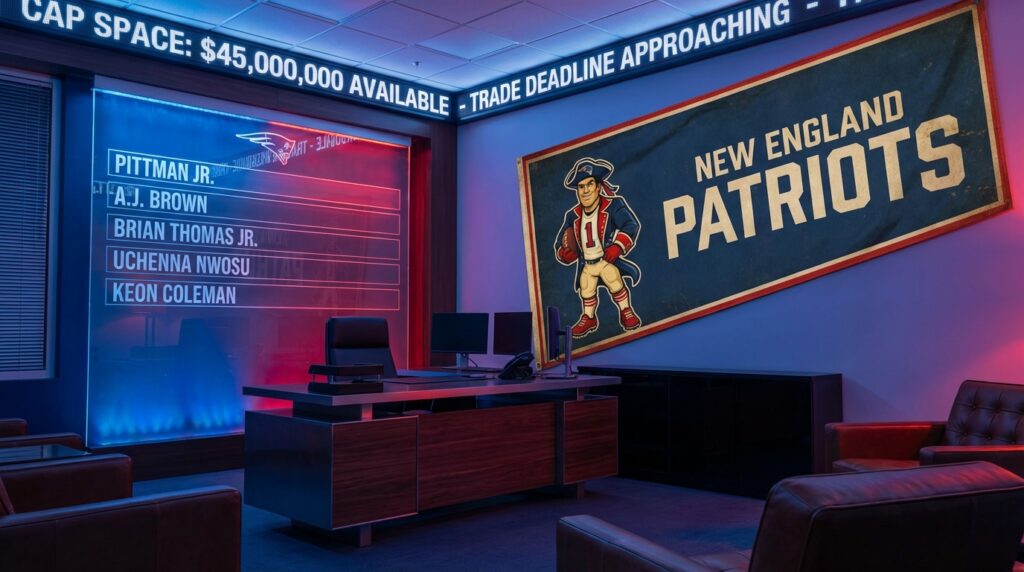
Patriots trade targets are the headline in every offseason conversation, and for good reason. The team sits with roughly $40 million in cap space, but it faces tough choices about where to spend. Rumors link New England to names like A.J. Brown, Michael Pittman Jr., DJ Moore, Uchenna Nwosu, and several affordable offensive linemen. However, not every linked player requires a franchise-altering haul. Because the Patriots need both immediate playmakers and budget-friendly fits, this article isolates five realistic targets. Each option balances on-field impact and manageable cap hits, and some moves could come without surrendering premium picks. For example, Pittman would bring proven production, but he carries a sizable cap number. Meanwhile, a movable veteran or a younger breakout candidate could be cheaper and still upgrade the roster. Therefore, we examine who fits schematically under Mike Vrabel and what Boston can afford. Read on to see five trade targets who make sense beyond the splashy rumors.
Patriots trade targets at wide receiver
The Patriots enter the offseason with about $40 million in cap space, so they can pursue receivers who fit both budget and scheme. Michael Pittman Jr. finished last season with 80 receptions for 784 yards and seven touchdowns. He logged at least 800 receiving yards in four prior seasons, and he posted 1,152 yards on 109 catches in 2023. However, Pittman would carry approximately a $24 million cap hit in 2026, which limits flexibility despite his proven volume production.
A.J. Brown remains a true game changer. He had 78 receptions for 1,003 yards and seven touchdowns last season. At 28, he still offers prime playmaking. Moreover, reports say Brown was open to a move, and some analysts see a Brown-Patriots fit. Because Brown would be a win-now addition, he likely demands a heavy draft price and a sizable cap commitment. For more on that scenario, see this PatriotsReport piece: Patriots trade for A.J. Brown.
DJ Moore offers a different profile. He totaled 50 receptions for 682 yards and six touchdowns in 2025, and he turns 29 this April. Over prior seasons he reached at least 900 receiving yards, and he has 16 touchdowns on deep throws across the last four years. Trading for Moore would likely come with about a $24.5 million cap hit. Therefore, Moore fits if New England wants vertical play without overspending on a single contract.
Brian Thomas Jr. and Alec Pierce look like lower-cost targets with upside. Thomas is 23 and already produced a 1,000-yard season. He had 48 receptions for 707 yards and two touchdowns in his second year. As a rookie he recorded 1,282 yards and 10 touchdowns, so his ceiling remains high. Meanwhile, Alec Pierce presents intrigue as a young vertical threat and scheme fit. For context on Pierce and the broader offseason rumors, consider this PatriotsReport roundup: Patriots offseason updates.
Quick comparison
- Michael Pittman Jr. 2025: 80 catches 784 yards 7 TDs cap hit ~24M
- A.J. Brown 2025: 78 catches 1,003 yards 7 TDs trade candidate (report) Link
- DJ Moore 2025: 50 catches 682 yards 6 TDs cap hit ~24.5M
- Brian Thomas Jr. young upside 48 catches 707 yards 2 TDs; rookie 1,282 yards 10 TDs
- Alec Pierce projectable vertical threat
Fit notes
Because the Patriots could also opt out of the second year of Stefon Diggs’s contract, they would free up to $16.8 million. Therefore, New England can mix a high-end target with a younger addition. In short, the Patriots can chase immediate playmakers or affordable breakout candidates. Each option balances cap realities with schematic fit and upside. For background on tight-end and offensive line needs that affect receiver usage, read this related PatriotsReport scouting piece: Patriots free agent targets.
Patriots trade targets: offensive line option — Little
The Patriots could target a versatile offensive lineman to stabilize protection. Little started at left tackle and dealt with a hamstring injury last season. In 14 games he allowed nine sacks and 45 pressures. However, he also has experience at guard and right tackle, which increases his value to New England. Little carries an estimated $12 million cap hit and he remains under contract through 2027. Therefore, acquiring him would buy both starting continuity and positional flexibility without a massive cap burden.
Fit wise, Little can compete immediately at left tackle. If performance slips, the team can move him inside to guard. Because Drake Maye needs consistent protection and the Patriots value a balanced line, Little’s versatility matters. Moreover, adding him reduces the urgency to spend premium assets in free agency. In short, Little blends immediate help with salary control.
Patriots trade targets: edge rusher option — Uchenna Nwosu
Uchenna Nwosu offers pass rush upside but brings contract complexity. At 29, he posted seven sacks this past season and generated 46 pressures. He added nine pressures in the postseason, showing late‑season impact. However, injuries limited him to 12 games across 2023 and 2024. His current cap hit sits near $20.7 million, and he would likely seek a new contract beyond his existing deal.
Despite the cost, Nwosu fits a Patriot defense that needs consistent edge pressure. He can work as a primary outside rusher or as a strong situational piece. Because he has missed time, New England should structure a trade with protections tied to playtime or incentives. Meanwhile, a short‑term deal or a restructured contract could align his cap number with the Patriots’ budget.
Impact on roster and cap
Adding Little plus Nwosu would address two major needs. Little stabilizes the line at roughly $12 million in cap space. Nwosu brings rush production but consumes about $20.7 million. Therefore, the Patriots would need to balance these costs against their roughly $40 million cap room. Ultimately, pairing a midrange lineman with a restructured pass rusher fits the club’s need for both protection and pressure while keeping long‑term flexibility.
Comparison table: Patriots trade targets
| Player | Age | Position | 2025 season (recent) | Estimated cap hit | Contract notes |
|---|---|---|---|---|---|
| Michael Pittman Jr. | 28 | Wide receiver | 80 receptions, 784 yards, 7 TDs | $~24 million (2026 projected) | Proven volume receiver; significant cap impact |
| A.J. Brown | 28 | Wide receiver | 78 receptions, 1,003 yards, 7 TDs | Likely high; trade candidate | Win-now game changer; would cost draft capital |
| DJ Moore | 29 | Wide receiver | 50 receptions, 682 yards, 6 TDs | $~24.5 million | Deep threat with past 900+ yard seasons |
| Brian Thomas Jr. | 23 | Wide receiver | 48 receptions, 707 yards, 2 TDs (Year 2); rookie 1,282 yards, 10 TDs | Low (young player) | High upside; trade rumors tied to draft picks |
| Alec Pierce | N/A | Wide receiver | Projectable vertical threat; stats vary | N/A | Affordable upside candidate; scheme fit potential |
| Little | 26 | Left tackle | Allowed 9 sacks, 45 pressures in 14 games | $~12 million | Versatile across line; under contract through 2027 |
| Uchenna Nwosu | 29 | Edge/linebacker | 7 sacks, 46 pressures; 9 postseason pressures | $~20.7 million | Effective pass rusher; injury history; may seek new deal |
Quick notes
- Ages and cap numbers reflect reported figures when available.
- Estimated cap hits show team cost if acquired and not restructured.
- Use this table to weigh impact versus cap flexibility.
Comparison table: Patriots trade targets
| Player | Age | Position | 2025 season (recent) | Estimated cap hit | Contract details |
|---|---|---|---|---|---|
| Michael Pittman Jr. | 28 | Wide receiver | 80 receptions, 784 yards, 7 TDs | $~24 million (2026 projected) | Proven volume receiver; significant cap impact |
| A.J. Brown | 28 | Wide receiver | 78 receptions, 1,003 yards, 7 TDs | Likely high (team would absorb big cost) | Win-now star; trade candidate; draft capital likely required |
| DJ Moore | 29 | Wide receiver | 50 receptions, 682 yards, 6 TDs | $~24.5 million | Deep threat with history of 900+ yard seasons; vertical option |
| Brian Thomas Jr. | 23 | Wide receiver | 48 receptions, 707 yards, 2 TDs; rookie 1,282 yards, 10 TDs | Low (young contract) | High upside; linked to draft pick trades |
| Alec Pierce | N/A | Wide receiver | Projectable vertical threat; secondary receiving role | Low to moderate | Affordable upside; fits a spacing role |
| Little | 26 | Left tackle | Allowed 9 sacks, 45 pressures in 14 games | $~12 million | Versatile across line; under contract through 2027 |
| Uchenna Nwosu | 29 | Edge/linebacker | 7 sacks, 46 pressures; 9 postseason pressures | $~20.7 million | Effective pass rusher; injury history; may seek new deal |
Quick notes
- Ages and cap figures reflect reported or projected numbers.
- Estimated cap hits assume no immediate restructuring.
- Use this table to weigh impact against cap flexibility.
- Because the Patriots have roughly $40 million in cap space, they can mix a high-end addition with younger, cheaper options.
Frequently Asked Questions
What are the most realistic Patriots trade targets right now?
Michael Pittman Jr., DJ Moore, Brian Thomas Jr., Alec Pierce, Little and Uchenna Nwosu. Pittman and Moore provide proven production with large cap hits. Thomas and Pierce offer youth and upside at lower cost. Little and Nwosu address line play and pass rush with manageable flexibility.
How does the Patriots salary cap affect these trade rumors?
New England has roughly 40 million in cap space. That allows one high cap addition plus cheaper complements. Pittman carries about a 24 million hit and Moore about 24.5 million. Opting out of Stefon Diggs second year could free 16.8 million.
Would pursuing A.J. Brown or Pittman require heavy draft capital?
Yes. A.J. Brown likely costs premium draft assets. Pittman may require fewer picks but still significant value since both are immediate starters.
Are younger receivers such as Brian Thomas Jr and Alec Pierce safer bets?
Yes. They reduce salary risk and carry upside. Thomas recorded a 1,000 yard rookie season. Pierce provides vertical spacing. Neither guarantees instant wins so pairing youth with one veteran balances present and future needs.
How should New England balance short term gains with long term flexibility?
Mix one impactful addition with affordable players and contract restructuring. Use incentives and short term deals to limit dead cap and preserve draft and cap flexibility.