Jets Week 17 Preview: Stakes, Matchups and Coaching Angles
This Jets Week 17 Preview matters for both New York and New England. Week 17 will shape playoff math and roster decisions, because injuries loom. Fans should watch quarterback play, front seven matchups, and red zone efficiency.
Garrett Wilson versus the Patriots secondary will test coverage schemes. Breece Hall’s workload matters because the Jets rely heavily on the run. Meanwhile, the Patriots will try to pressure Brady Cook’s line and force quick decisions.
Defensively, New York struggles to stop the run and generate sacks. Therefore, New England should mix power runs and play-action to exploit seams. Special teams and field position could decide a close game late.
Read on for matchup breakdowns, key stats, and coachable edges. As fans, we will argue angles and point to matchup advantages that matter most. By the end, you should know how the Patriots can beat New York in Week 17.
Jets Week 17 Preview Offense Overview
The Jets offense ranks just 270.1 yards per game, which sits 29th in the league. Their pass game struggles because they average only 145.9 passing yards per game, 32nd overall. However, the run attack remains a bright spot at 124.3 rushing yards per game, 9th in the NFL. Scoring sits at 18.8 points per game, and red zone efficiency is a poor 45.7 percent. As a result, New York wins via yards after contact and time of possession more often than explosive passing plays.
Third down efficiency is a weakness. The Jets convert only 35.0 percent on third down, ranking 27th. Therefore, drives stall and field position matters more. Furthermore, red zone struggles and missed opportunities amplify pressure on the offense to avoid turnovers.
Jets Week 17 Preview Key Players and Injury Notes
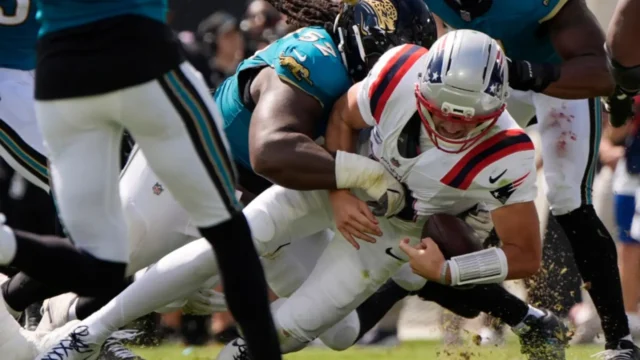
Justin Fields went to injured reserve, and Brady Cook will start this week. Brady Cook has completed 58 of 98 passes for 527 yards. However, his 59.2 percent completion rate and one touchdown come with six interceptions. His QB rating sits at 9.7, and he has been sacked 17 times on 89 dropbacks. Because his pressure-to-sack rate is high at 53.1 percent, pass rush schemes could force mistakes.
Breece Hall carries the offense. He has 229 carries for 954 yards and averages 4.2 yards per carry. Hall also adds 34 catches for 332 yards. Isaiah Davis provides complementary explosiveness with 5.6 yards per carry and 20 catches on 27 targets. Meanwhile, Garrett Wilson leads receiving with 36 catches for 395 yards. Adonai Mitchell and John Metchie provide vertical options, while Mason Taylor’s status remains questionable.
The offensive line shows mixed grades. Olu Fashanu has a PFF 70 but allowed six sacks and 37 pressures. Josh Myers grades poorly at center and registers heavy pressure numbers. Therefore, protection and timing are concerns. Overall, the Jets live on the ground, while passing efficiency and line play create exploitable edges for the Patriots.

Jets Defense: What Works and Where They Break
The Jets defense allows 342.3 yards per game, ranking 21st. Their pass defense gives up 208.7 yards per game, which is middle of the pack at 13th. However, the run defense struggles badly at 138.7 rushing yards per game, 28th in the NFL. As a result, opponents attack the ground early and often.
Aaron Glenn runs a unit that creates few splash plays. The Jets record just 25 sacks and a 16.1 percent pass rush rate, both near the bottom. Furthermore, EPA per dropback sits at minus 0.119, which indicates pass defense inefficiency under pressure. In short, they rarely generate consistent pressure or turnovers.
Key contributors show mixed results. Will McDonald leads with eight sacks and 22 hurries. Jermaine Johnson adds hurries but only three sacks. Harrison Phillips anchors the interior with solid run defense numbers. Nevertheless, interior rushers offer limited splash plays, which leaves gaps for power runs.
Those gaps create clear opportunities for New England. First, because the Jets struggle against the run, the Patriots should attack between the tackles and force linebackers to make tackles in space. Second, with limited pass rush, quick passing concepts and screens can neutralize edge defenders. Therefore, short throws and tempo will reduce Brady Cook’s rush-to-sack risk while still creating yards after catch.
Additionally, the secondary lacks turnover production. The Jets have zero interceptions from consistent pressure, which means the Patriots can take more calculated risks downfield. Targeting the slot and involving tight ends in mismatches looks sensible, because Ja’Sir Taylor and Brandon Stephens have allowed volume and tackles but few impact plays.
Finally, New England should exploit personnel weaknesses. Kiko Mauigoa and Qwan’Tez Stiggers show limited pass-rush and coverage impact. As a result, misdirection plays and play-action off the run game should produce space and make the Jets defend for longer downs. In short, run first, then attack the soft spots in coverage.
Jets Week 17 Preview: Quick Stat Snapshot
- Total Offense: 270.1 YPG (Offense 29th)
- Total Defense: 342.3 YPG allowed (Defense 21st)
- Passing Offense: 145.9 YPG (Offense 32nd)
- Passing Defense: 208.7 YPG allowed (Defense 13th)
- Rushing Offense: 124.3 YPG (Offense 9th)
- Rushing Defense: 138.7 YPG allowed (Defense 28th)
- Points Scored: 18.8 PPG (Offense 28th)
- Points Allowed: 28.4 PPG (Defense 30th)
- Red Zone Success: 45.7% conversion (Offense 29th), 59.6% allowed (Defense 21st)
- Third Down Conversion: 35.0% (Offense 27th), 36.3% allowed (Defense 9th)
- Sacks: 17 allowed on offense, 25 team sacks on defense
- Interceptions: 0
Takeaway for Patriots: Leverage the weaknesses in the Jets’ run defense and turnover-prone offense to gain an early advantage.
Gameplan Checklist for Patriots
- Attack Weak Run Defense: Focus on ground game and run efficiency.
- Utilize Quick Pass Plays: Involve short passing to disrupt Jets’ defensive schemes.
- Pressure points on Brady Cook: Create defensive pressure scenarios.
- Exploit Secondary: Aim for big plays and test the Jets’ struggling secondary.
- Control Red Zone Opportunities: Execute strong red zone plays to capitalize on scoring chances.
Conclusion
The Jets Week 17 Preview shows a team built around the run yet hampered by pass efficiency and protection problems. As a result, New England can exploit several clear edges. Because the Jets allow 138.7 rushing yards per game, attacking between the tackles should yield early success.
Meanwhile, Brady Cook’s inexperience and the offensive line’s pressure numbers create turnover opportunities. Therefore, quick pressure, disguise blitzes, and early tempo can force mistakes. The Patriots should also mix short throws with play-action to exploit soft zones. Moreover, targeting the slot and tight end mismatches will stress the Jets secondary, which lacks interception production.
This matchup will hinge on coaching adjustments and situational football. If New England controls the line of scrimmage and finishes drives in the red zone, they should control the game clock and scoreboard. For deeper analysis, injury updates, and live coverage, visit Patriots Report LLC and follow on Twitter at @ZachGatsby. Stay tuned for snap-level breakdowns and fan-forward angles as Week 17 approaches.
Frequently Asked Questions
How effective is the Jets offense heading into Week 17?
The Jets offense ranks low in total yards at 270.1 per game. Their passing game struggles with 145.9 yards per game. However, the run game remains a strength at 124.3 rushing yards per game. Because they score just 18.8 points per game, efficiency in the red zone matters. Therefore, New England can force punts and use field position to win.
Who are the key Jets offensive players to watch and what are their roles?
Breece Hall leads the ground attack with 954 rushing yards and 34 catches. Garrett Wilson is the primary receiving threat with 395 yards. Isaiah Davis gives the Jets a change of pace. Meanwhile, Brady Cook replaces Justin Fields and will start. Cook has shown accuracy concerns and turnover risk, so pressure and disguise blitzes can disrupt him.
What are the biggest weaknesses in the Jets defense the Patriots can exploit?
The Jets allow 138.7 rushing yards per game, so run defense ranks poorly. Their pass rush is weak at a 16.1 percent pressure rate and 25 team sacks. As a result, New England should attack the run early and use quick passing to neutralize edge rushers. Moreover, the secondary has produced zero interceptions, so calculated downfield shots make sense.
How do injuries and depth affect the matchup?
Justin Fields is on injured reserve, and Brady Cook starts. Mason Taylor is questionable and could limit vertical looks. Will Campbell remains out, which affects line depth. Therefore, injuries push the Jets toward a conservative plan and more runs. The Patriots can exploit that predictability with varied fronts and play-action.
What tactical approach should Patriots fans expect in Week 17?
Expect New England to run early and force the Jets to stack the box. Then, use play-action and quick throws to attack soft zones. Also, look for disguised pressure and blitzes designed to create turnover chances. Finally, special teams and field position will play a big role in a close game.