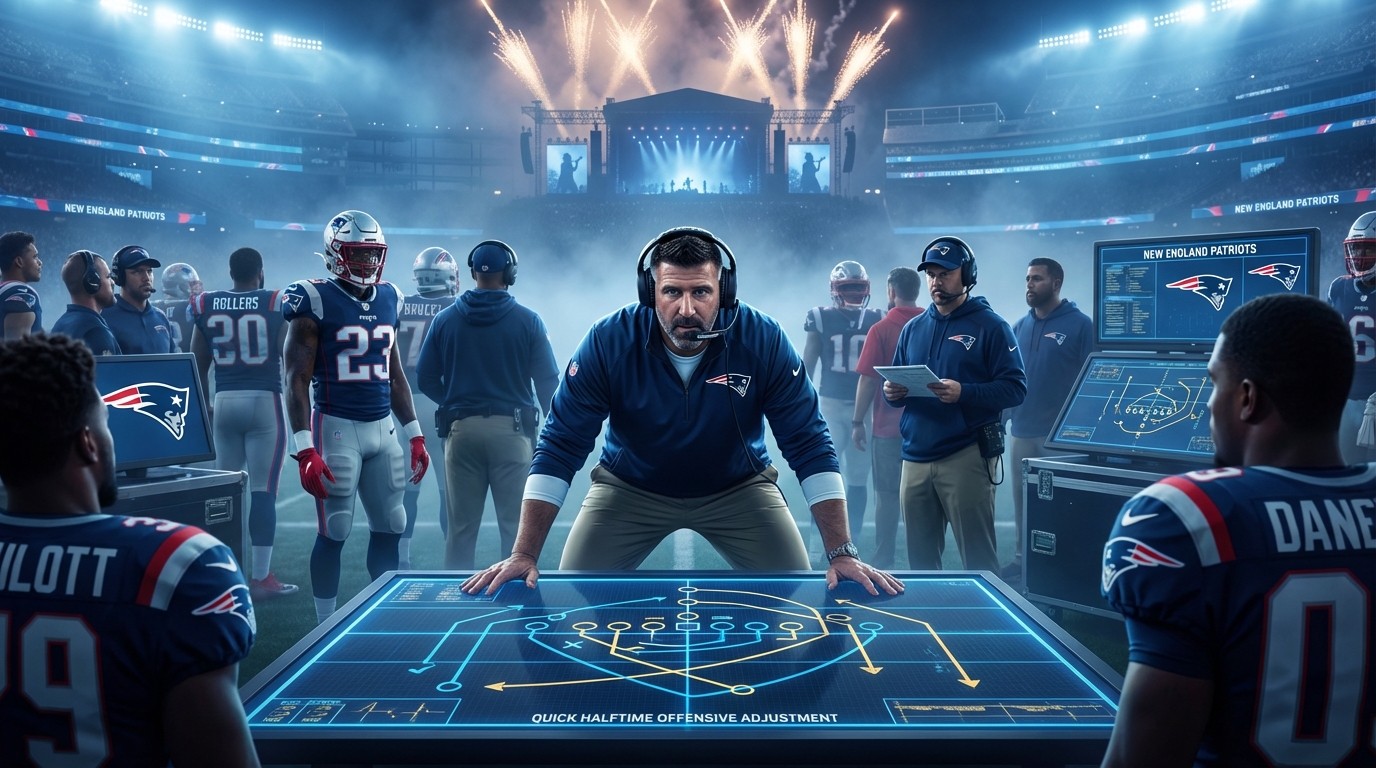
Mike Vrabel Super Bowl edge showed early in Super Bowl LX preparations and redefined halftime strategy for the Patriots. He ordered unusual practice drills meant to simulate the long halftime. Players left the field for fourteen minutes while music played. This unusual pause tested focus and reset energy levels.
Analysts think the move could blunt third quarter lapses that plagued the team in 2025. Therefore the tactic feels deliberate and evidence based. Because it mimics game day disruptions, it trains bodies to restart and respond. As a result, the Patriots may gain a physiological and mental advantage. However, the edge is narrow and depends on execution and opponent response.
Meanwhile the Seahawks might not have used the same simulation. If they did not, that difference could become decisive in key moments. The forthcoming sections will examine timing, player feedback, and statistical markers. We will also weigh risks, including overcompensation and lost momentum. Ultimately the article tests whether Vrabel’s halftime idea becomes a decisive x factor.
Mike Vrabel Super Bowl edge: How a 14-minute halftime drill became a tactical experiment
Mike Vrabel staged a deliberate, unusual rehearsal to mirror Super Bowl LX halftime. After a special teams session he blew a whistle at 1:52 p.m. and motioned players off the field. Players then spent 14 minutes inside while Bad Bunny songs played over the stadium speakers. The scene read like a controlled interruption. Coaches and staff watched body language and routine. As a result, the team tested how quickly players could mentally and physically reengage.
The intent was clear. Vrabel wanted to recreate an extended halftime and its disruptions. Therefore the drill forced players to manage an enforced pause. It simulated noise, a break in rhythm, and the sensory reset that comes with a stadium production. Because the Patriots struggled after halftime during the 2025 regular season, the coaching staff used the exercise to reduce third quarter lapses. The move also provided a baseline for in-game adjustments and quick warmup plans.
This preparation carries potential upside and risk. On one hand it can blunt sluggish restarts and build practiced routines for returning from a long break. On the other hand it could promote overcompensation or an artificial calm that fails under Super Bowl pressure. Meanwhile the broader context matters. For additional team perspective and locker room signals, see reporting on related Patriots quotes and analysis: Patriots Quotes Analysis. For veteran reaction and historical framing, read: Vince Wilfork’s Remarks. For AFC context and opponent scouting notes, consult: AFC Notes.
In short, the 14-minute simulation represented a focused attempt to convert a weakness into an edge. The following sections will evaluate player feedback, timing data, and whether the Seahawks rehearsed similar measures.
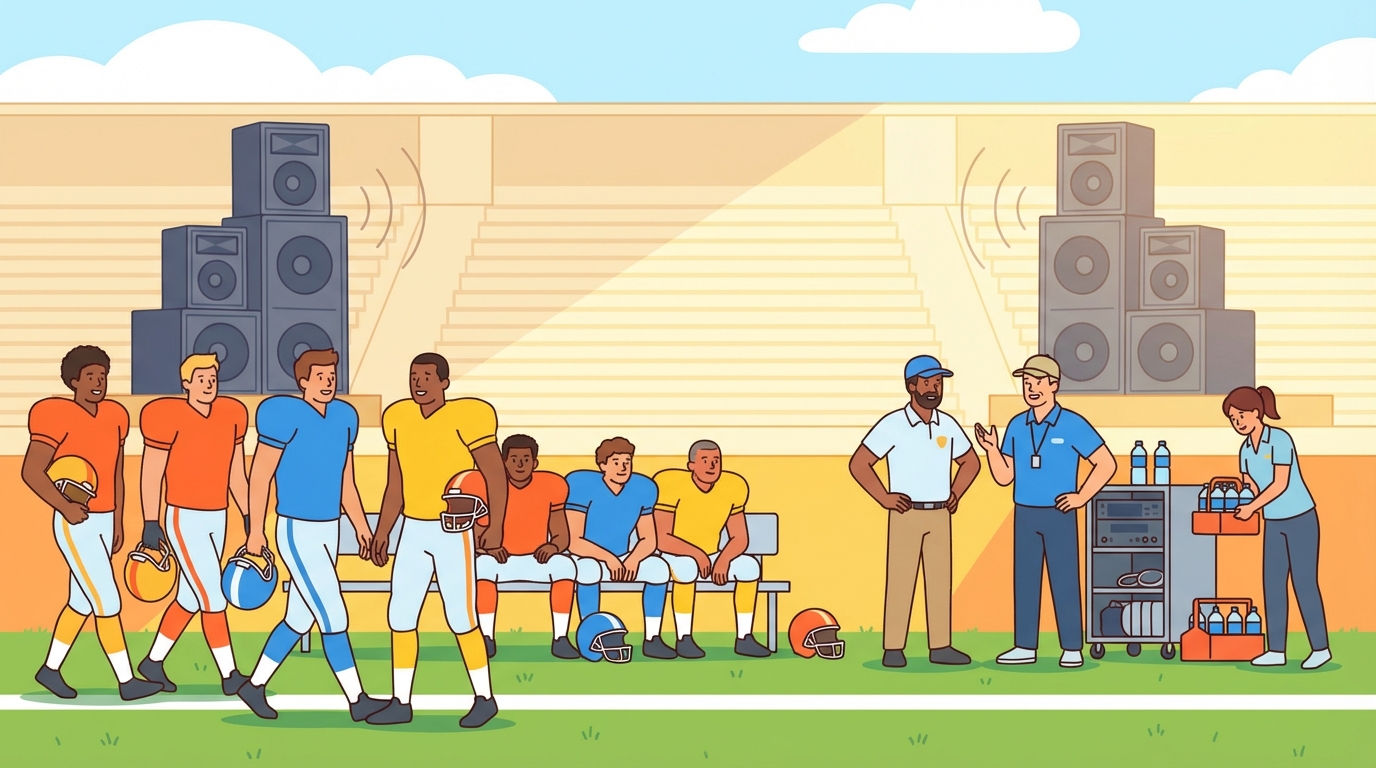
Analysis of the extended halftime and its potential game impact
Several players called extended halftime a real problem during games. Lindsey Jones of The Ringer documented the controlled interruption at practice, noting the whistle at 1:52 p.m. and the 14-minute break with Bad Bunny playing over stadium speakers. As a result, the pool report highlighted how the team reacted to an enforced pause. For full context, see Lindsey Jones’ reporting here: Lindsey Jones’ reporting.
The Patriots struggled after halftime during the 2025 regular season. Therefore Vrabel treated the lapse as a solvable weakness. He built a halftime show simulation into practice to mimic Super Bowl LX conditions. Because the exercise recreated noise, delay, and sensory distraction, coaches tested warmup timing and re-entry routines. This extended halftime rehearsal aimed to shorten the lag between locker room and first snap. As a result, the Patriots hoped to blunt common third quarter slumps.
Strategically, the move can also disrupt an opponent’s flow. If the Seahawks did not practice a similar routine, they could face an unexpected advantage. In that case, the Patriots’ rehearsed restart serves as an x-factor. It forces opposing coaches to adjust tempo and personnel substitution plans. Meanwhile special teams and situational scripts gain value because they anticipate a slower, noisier resumption.
However, risks remain. The simulation could encourage overcompensation and lead to rushed plays. It could also create an artificial calm that fails under Super Bowl pressure. Therefore measurable indicators matter. Watch third quarter scoring, time to first effective play, and penalty rates after halftime. If those metrics improve, the extended halftime strategy paid dividends. If not, it will look like an overengineered drill.
Overall the approach feels cautiously optimistic. Vrabel’s method addresses a clear weakness and gives the Patriots a repeatable routine. Because the edge depends on execution, it may be narrow. Yet the halftime show simulation could become a subtle but meaningful advantage in Super Bowl LX.
Halftime strategies comparison: Patriots vs Seahawks
| Category | New England Patriots | Seattle Seahawks |
|---|---|---|
| Duration of halftime preparation | 14-minute simulated break during practice; whistle at 1:52 p.m. | No public report of extended simulation; likely standard halftime walk-throughs |
| Environmental simulation (music, mood) | Stadium speakers played Bad Bunny and similar tracks to recreate loud, slow-return mood | No reported music simulation; typical calm locker-room reset expected |
| Player feedback | Players acknowledged extended halftime can be problematic. Practiced routines aim to counter that. | No public player comments about extended halftime preparation |
| Tactical advantages | Trains restart cadence; reduces third quarter lag; serves as possible x-factor to disrupt opponent flow | If unprepared, may face slower reaction after halftime; conversely, could exploit Patriots if they overcompensate |
| Implementation notes | Coaches monitored body language and warmup timing. Drill tested re-entry and quick warmups | Implementation unconfirmed publicly. Seahawks may use conventional halftime protocols |
| Risk level | Moderate. Could cause overcompensation or artificial calm under pressure | Moderate. Risk of being caught off-guard if Patriots’ simulation works |
Mike Vrabel’s extended halftime rehearsal could give the Patriots a narrow but real Super Bowl edge. He converted a recurring weakness into a repeatable routine. As a result, players practiced restarting under simulated noise and delay. Because the team struggled after halftime in 2025, the drill targeted a clear problem with specific fixes.
Vrabel’s experience matters here. His decision to blow the whistle, pull players off the field, and run a 14-minute simulation with Bad Bunny over the stadium speakers showed foresight. Therefore his approach functions as an x-factor. It may change third quarter outcomes by shortening the time to the first effective play. Meanwhile opponents who fail to prepare for the same disruption could lose tempo and composure.
Risks remain, and execution will decide the payoff. However the cautious optimism is warranted because the drill aligns with measurable goals. Watch third quarter scoring, time to first snap, and penalty rates after halftime. For coverage and updates from Patriots Report LLC visit Patriots Report and follow on Twitter/X at Zach Gatsby.
Frequently Asked Questions (FAQs)
What exactly did Mike Vrabel do during the extended halftime drill?
He blew a whistle at 1:52 p.m. and sent players off the field. Players spent 14 minutes inside while Bad Bunny songs played over stadium speakers. The drill recreated an extended halftime show. Coaches used it to study body language and restart routines.
Why run this halftime show simulation?
The Patriots struggled after halftime in 2025. Therefore Vrabel wanted a repeatable fix. He aimed to shorten the time to the first effective play. Because the Super Bowl halftime is long and noisy, the simulation built tolerance for delay and distraction.
How could the tactic affect third quarter performance?
It can reduce sluggish restarts and lower penalty rates after halftime. As a result, the Patriots may execute faster and more cleanly. Conversely, the edge only matters if players execute practiced warmups.
Are there risks to this approach?
Yes. It can cause overcompensation or create an artificial calm. If players rush or misread tempo, mistakes may increase. Therefore measurement of third quarter metrics matters.
Will this become the decisive Mike Vrabel Super Bowl edge?
Possibly, but not guaranteed. Vrabel’s experience is an x-factor. However the advantage is narrow and depends on execution and opponent preparation. Because Super Bowl LX will hinge on small margins, this tactic could swing momentum. Watch in-game third quarter indicators to judge success.