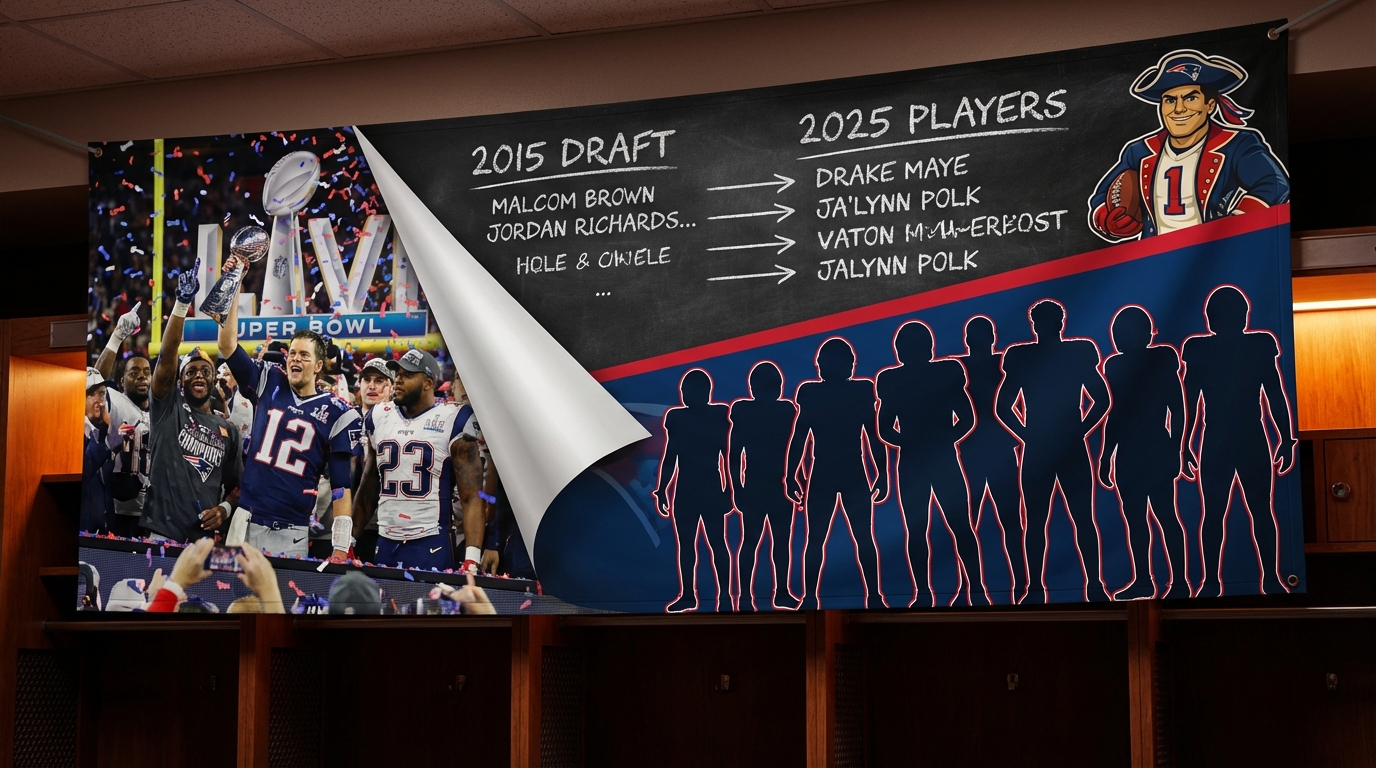
Patriots 2015 Super Bowl memories still pulse through New England and across the NFL, forming the emotional backbone of this story about how that championship squad shaped the Patriots roster a decade later. Those memories — from Malcolm Butler’s improbable interception to the quiet, workmanlike moments in the locker room — gave players and fans a model of resilience and attention to detail, because younger athletes watched and folded those behaviors into their own games.
Emotionally, the 2015 victory offered proof that preparation and belief can rewrite expectations, and moreover it forged an identity that coaches reference when evaluating temperament and clutch performance. In this article we trace concrete links between 2015 values, personnel decisions and coaching priorities and the 2025 depth chart, then highlight players whose paths reflect that cultural inheritance.
By connecting memory to methodology, we explain why the echo of Super Bowl XLIX matters now and how Patriots 2015 Super Bowl memories helped shape scouting, roster strategy and the team’s competitive mindset heading into the next season.
Patriots 2015 Super Bowl memories and player journeys
Carlton Davis grew from a high school standout into a disciplined corner, because he signed with Auburn just days after Super Bowl XLIX. He recalled being “turnt up” and enjoying recruiting visits, yet he learned to channel that energy into pro preparation.
Robert Spillane arrived as an underdog, and he still says, “I’m still waiting for that moment when it all clicks.” However, that hunger pushed him to refine instincts and work on consistency.
Garrett Bradbury shifted from tight end to center in college, and that change paid off when he won the Rimington Trophy. As a result, he embraced adaptability and technique as core strengths.
Harold Landry grew into a reliable pass rusher, leading the team in sacks because he adopted a relentless work ethic. Stefon Diggs used early struggles as fuel, and he told younger players, “Hopefully I can continue to be a motivation for them… you need a little bit of luck, but hopefully God’s on your side.”
Morgan Moses battled back from injury, and he describes 2015 memories as a lesson in resilience. Malcolm Butler’s game-sealing interception remains a teaching moment for many. Ben Brown still remembers the parade in Vicksburg, because Butler’s play showed how one moment can change lives.
Together, these stories show development, grit, and the enduring influence of that championship team.

Patriots 2015 Super Bowl memories continue to shape how the franchise evaluates character, situational play and clutch instincts. Below is a compact comparison of influential names tied to that title and the ways their careers echo in the 2025 roster.
| Player | 2015 role or origin | Career developments and achievements | 2025 roster impact and legacy |
|---|---|---|---|
| Malcolm Butler | Cornerback who made the game-sealing interception in Super Bowl XLIX | Became a cultural touchstone after the pick; served on multiple NFL rosters afterward and inspired hometown celebrations | Used as a teaching example for situational awareness and competitive calm; his play still guides film-room emphasis on one-on-one technique |
| Julian Edelman | Primary slot receiver and clutch target in 2015 | Built a reputation for postseason reliability and later transitioned out of playing | Set the standard for toughness and route savvy that coaches seek in receivers today |
| Garrett Bradbury | Not on 2015 Pats, but cited for technique and center play development | Won the 2018 Rimington Trophy; became an NFL starter at center | Influences how the team values center play and interior technique in scouting and development |
| Harold Landry | Modern pass rusher and team sack leader in 2025 | Developed into a consistent edge producer, leading the team with 8.5 sacks this season | Reinforces the premium on pressure generation that the 2015 mentality valued because game winners often start up front |
| Carlton Davis / Robert Spillane / Stefon Diggs | Represent next-generation players shaped by 2015 memories | Each followed different paths from college to the NFL and emphasized resilience and preparation | Their careers show how 2015 lessons in preparation, adaptability and luck inform player development and roster decisions |
For more on fan recollections, see How do Favorite Patriots Super Bowl memories inspire fans? and for context on Butler’s continued relevance, see Will Malcolm Butler honorary captain for Super Bowl LX?.
Patriots 2015 Super Bowl memories: Culture lessons for roster building
The 2015 team’s culture still shapes decision making, because coaches look for temperament as much as talent. In the locker room, small rituals and quiet work set a standard. Those locker room stories teach younger players how to handle pressure. As a result, scouts measure clutch instincts alongside measurable traits.
Leaders set the tone, and motivation quotes keep that voice alive. Robert Spillane captures the persistent mindset when he said, “I’m still waiting for that moment when it all clicks.” Stefon Diggs offers a similar message: “Hopefully I can continue to be a motivation for them… you need a little bit of luck, but hopefully God’s on your side.” Moreover, Morgan Moses recalls battling uncertainty and then rebuilding through steady work.
Strategy learned from Super Bowl XLIX focuses on situational preparedness. Therefore roster building in 2025 favors versatile players who show poise in late-game reps. Teams prioritize edge rushers and interior toughness because pressure and line play decide tight games. Ultimately the Patriots use that legacy as a filter, and they sign people who mirror the humility, preparation and resilience that delivered a championship. Coaches reference classic locker room stories during meetings. Those examples shape practice plans and mental reps.
Conclusion
The 2015 Patriots Super Bowl victory left a legacy of belief and detailed preparation. Because that team combined poise and practice, current players still draw lessons from the moment. As a result, coaches and scouts value situational awareness and mental toughness when building the 2025 roster. Malcolm Butler’s interception remains a teaching clip in meetings, and players reference locker room stories to set standards.
Moreover, the emotional impact reaches beyond the field. Fans and young athletes remember how one play changed a town. Therefore the franchise keeps seeking players who match that resilience and competitive calm.
Patriots Report LLC captures these deeper threads with patient, heartfelt analysis. Visit patriotsreport.com for long form pieces and follow updates on Twitter at @ZachGatsby. Finally, the 2015 championship shows that culture can last. As a result, the Patriots continue to build with memory and method guiding every decision. Expect those lessons to shape seasons ahead.
Frequently Asked Questions (FAQs)
What are Patriots 2015 Super Bowl memories and why do they matter?
Patriots 2015 Super Bowl memories refer to game moments, locker room stories and the cultural imprint of Super Bowl XLIX. They matter because those memories shaped how fans and players view preparation and clutch play. As a result, the moment lives on in meetings and drills. Coaches use these memories to teach focus and situational awareness.
How do those memories influence roster building for 2025?
The memories influence priorities in scouting and signings because teams seek temperament as well as talent. Therefore decision makers favor players who show resilience and late-game poise. For example, edge rushers and interior linemen gain value due to situational pressure. Moreover, versatility ranks high in evaluations.
Which 2015 plays or players are cited most often?
Malcolm Butler’s game-sealing interception is the single most cited play. Julian Edelman’s toughness and team-first approach also appear in discussions. Coaches and veterans replay those clips to underline fundamentals. Ben Brown’s hometown parade illustrates how one play can change lives.
Do younger players actually reference the 2015 team?
Yes, because many on the 2025 roster were teenagers in 2015. Players like Carlton Davis and Robert Spillane studied clips to learn technique and mindset. Stefon Diggs has spoken about motivation and luck, and Morgan Moses references battling back from uncertainty. These examples show how history guides personal development.
How do coaches translate 2015 legacy into practical scouting and coaching?
Coaches fold locker room stories into teaching moments during meetings and walk-throughs. They build practice reps that mimic late-game stress because situational readiness matters. Consequently roster moves favor players who perform under pressure. This approach keeps the 2015 ethos alive in evaluation and training.