Drake Maye MVP 2025: Advanced Stats Make His MVP Case Undeniable
Drake Maye MVP 2025 is not a hot take; it is a statistical reality. Because eight of 11 ESPN staff picked him, momentum and credibility followed quickly. The case rests on elite efficiency metrics: Maye led the league with a 77.1 QBR, topping Jordan Love at 72.8 and Matthew Stafford at 71.1; he posted the NFL’s best completion percentage at 72 percent, about seven points higher than Stafford’s roughly 65 percent; NFL Next Gen Stats credited him with a plus-nine percent completion-over-expected mark, the best single-season figure since the metric began in 2016; he finished with 31 passing touchdowns to eight interceptions, and QBR’s points-above-average adjustments neutralize the soft-schedule critique because they weight opponent quality; and perhaps most telling, Maye produced that efficiency while absorbing 47 regular-season sacks, plus 15 more in three playoff games, which magnifies the value he generated under pressure and when facing unstable pass protection.
Therefore this article will back Drake Maye MVP 2025 with advanced metrics, film context, and Next Gen Stats evidence.

Drake Maye MVP 2025 Advanced-Stats Breakdown
Drake Maye MVP 2025 finds its strongest support in efficiency metrics. Because simple counting stats can mislead, advanced numbers tell a clearer story. Below we break down the key metrics that separate Maye from the pack.
Why QBR matters for Drake Maye MVP 2025
Maye led the NFL with a 77.1 QBR. That number sits well above the league, and it matters because QBR adjusts for game context and opponent quality. As a result, QBR reduces the soft-schedule critique.
- QBR league leader: 77.1
- Next closest: Jordan Love at 72.8
- Matthew Stafford among leaders with 71.1
This is not opinion. ESPN staff backed Maye as MVP, writing, “The numbers solidly back Maye for MVP. He led the league in QBR by a healthy margin, with his 77.1 well outpacing the next-best finisher — the Packers’ Jordan Love at 72.8 — and fourth-place Stafford at 71.1.” Therefore the QBR case is central.
Completion and accuracy edge
Maye finished with a 72 percent completion rate, the best in the NFL. That figure matters because it shows consistency. However completion percentage alone can be noisy.
Next Gen Stats helps clarify the picture. Maye posted a plus-9 percent completion percentage over expected. That mark is historic. It is the best single-season number since Next Gen Stats started tracking the metric. Because completion-over-expected adjusts for throw difficulty, it isolates pure accuracy and decision-making.
Key completion metrics at a glance
- Completion percentage: 72 percent
- Completion-over-expected: +9 percent (record since 2016)
Efficiency under pressure and volume translation
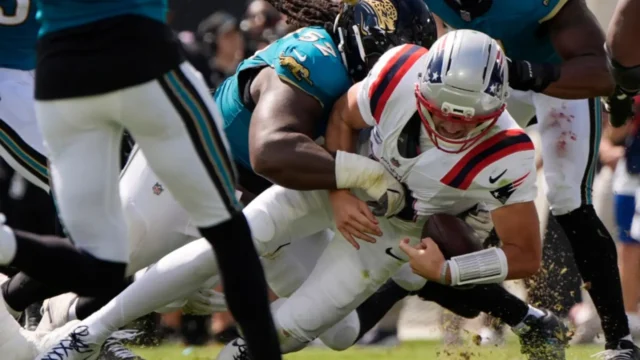
Maye finished with 31 passing touchdowns and eight interceptions. Those numbers show good decision-making and scoring output. Yet context matters. He suffered 47 regular-season sacks and added 15 more in three playoff games, which indicates he generated value despite heavy pressure.
QBR and Next Gen Stats also translate efficiency into points above average. Therefore they neutralize strength-of-schedule arguments by accounting for opponent quality and situational performance. The ESPN staff noted this explicitly when supporting Maye.
Further reading and context
- See PatriotsReport for analysis of Maye’s playoff run and evaluation
- Read how Maye’s big plays shaped award conversation
- Explore Patriots award finalists context
For metric definitions, consult ESPN QBR and NFL Next Gen Stats for methodology and deeper data.
Drake Maye MVP 2025: Key-Stats Comparison
Below is a quick comparison of core 2025 metrics for top NFL quarterbacks. Therefore readers can scan the numbers and see why Maye stands out.
| Player | Passing TDs (2025) | Interceptions | QBR | Completion % | Sacks (regular season) |
|---|---|---|---|---|---|
| Drake Maye | 31 | 8 | 77.1 | 72% | 47 |
| Matthew Stafford | 46 | 8 | 71.1 | ~65% | 23 |
| Jordan Love | — | — | 72.8 | — | — |
Note: Dashes indicate figures not available in this dataset. However the QBR and completion edges for Maye remain clear.
Drake Maye MVP 2025 Playoff Performance and Pressure Test
Drake Maye entered the postseason carrying an MVP-caliber regular season. However the playoff environment amplified pressure and exposed protection flaws. He absorbed 15 more sacks across three playoff games, on top of 47 regular-season sacks. As a result Chicago and opponents forced quicker reads and tighter windows.
Yet Maye answered with resilience and elite processing. He still made accurate throws and avoided careless turnovers. Because his overall season completion rate sat at 72 percent, that underlying accuracy translated into the playoffs. Therefore even when the pocket collapsed, Maye found ways to move the chains.
Maye also showed poise in high-leverage moments. He made quick decisions under duress and hit receivers in tight windows. Moreover Maye converted third downs and extended drives when the line failed. These plays softened the negative impact of sacks and empty plays.
Pressure inflated counting stats like sacks, but it also highlighted Maye’s value. QBR and Next Gen Stats reward context and clutch performance. So Maye’s ability to produce under severe pressure increases his points above average. In turn these postseason moments reinforce his MVP narrative.
In short, the playoffs were a harsher test but not a breaking point. Maye met the challenge with accuracy, courage, and smart play. Therefore his postseason showing strengthens, rather than weakens, the Drake Maye MVP 2025 argument.
CONCLUSION
Drake Maye MVP 2025 stands on measurable superiority and expert backing. Because he led the league with a 77.1 QBR, posted a 72 percent completion rate, and recorded a +9 percent completion-over-expected per Next Gen Stats, his season reads as historic. Moreover he finished with 31 passing touchdowns and just eight interceptions, which shows efficient scoring and smart decision-making.
ESPN staff reinforced the statistical case, with eight of 11 voters naming Maye MVP. Therefore the narrative is not only partisan noise. Advanced metrics and expert votes converge to favor Maye.
Playoff adversity further underscored his value. He faced heavy pressure and lost 15 additional sacks in three postseason games. However he still generated positive situational value. As a result, QBR and Next Gen Stats record him as a points-above-average outlier, which neutralizes the soft-schedule critique.
In short, Maye’s blend of accuracy, context-adjusted efficiency, and clutch toughness makes a compelling MVP argument. Patriots Report LLC will continue tracking his arc and the broader NFL story. For ongoing coverage visit Patriots Report and follow on Twitter at Zach Gatsby.
Frequently Asked Questions (FAQs)
What makes Drake Maye MVP 2025 a legitimate candidate?
Drake Maye’s case rests on efficiency and context-adjusted metrics. He led the league with a 77.1 QBR, which factors opponent quality and game situation. He also posted a 72 percent completion rate and a +9 percent completion-over-expected mark per Next Gen Stats. These numbers highlight elite accuracy, decision-making, and passer efficiency. Moreover, eight of 11 ESPN staff voted him MVP, so expert opinion aligns with the data.
How do Maye’s advanced stats compare to Matthew Stafford?
Stafford produced higher touchdown volume; however, Maye led in efficiency. Stafford threw 46 passing TDs, while Maye had 31, yet both had eight interceptions. Maye finished with a higher QBR at 77.1 versus Stafford’s 71.1. Also, Maye’s completion rate was about seven points higher. Therefore, Maye created more value per play, especially when adjusted for pressure and situation.
Does the Patriots’ soft schedule weaken Maye’s MVP argument?
Advanced metrics blunt that critique. QBR and Next Gen Stats adjust for opponent strength and context. As a result, completion-over-expected and points-above-average reflect true contribution. Because these metrics normalize schedule differences, Maye’s efficiency remains convincing and difficult to dismiss.
How did playoff pressure affect Maye’s numbers?
Playoff football raised the stakes and pressure. He absorbed 15 extra sacks across three postseason games, which increased negative counting stats. Yet he still made accurate throws and extended drives under duress. In short, the postseason highlighted his resilience, clutch processing, and ability to produce in tight windows.
Why do QBR and Next Gen Stats matter for the MVP debate?
Those metrics capture context, throw difficulty, and real impact. Next Gen Stats isolates completion difficulty and accuracy. QBR translates plays into points above average and rewards clutch performance. Together they separate narrative from measurable contribution. Consequently, analysts and voters use them to judge MVP candidates more fairly.