
Can Disrupting Sam Darnold in the Super Bowl Work?
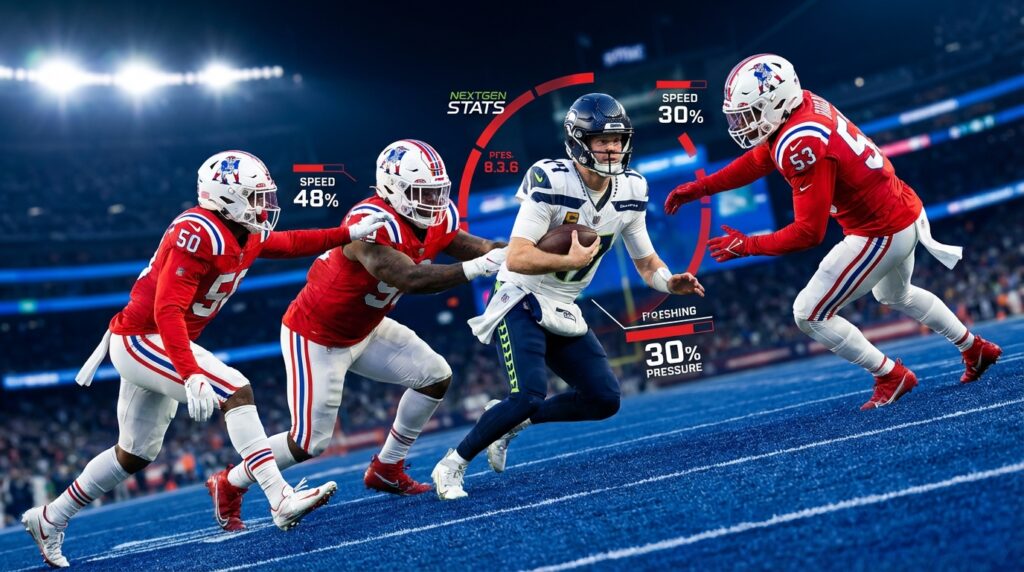
Disrupting Sam Darnold in the Super Bowl is the single most decisive play available to the Patriots’ defense. This introduction frames the tactical stakes and why seizing the trench battle matters. However, pressure must combine disguise and path control to force hurried throws and create turnover chances.
We will break down film-proven pressure concepts, four-man rush wins, linebacker and safety blitz windows, edge-setting techniques, and front-to-blitz rotations, and we will map how those schemes exploit Darnold’s clear split between high efficiency in clean pockets and sharp decline when he faces sustained rush; therefore, the goal is not just to sack him but to shorten his decision time and trigger poor reads.
Finally, the tactical analysis that follows will translate metrics into play calls, personnel matchups, and halftime adjustments so New England can turn modest pressure into sacks, turnovers, and game control and manage the clock aggressively in the fourth quarter.
Tactical Edge: Disrupting Sam Darnold in the Super Bowl with Patriots Defense
The Patriots should build a game plan around pressure and gap control because Sam Darnold’s production falls sharply under duress. In clean pockets Darnold posted big numbers, including a 346 yard, three touchdown game, but NextGenStats shows a clear split when defenders reach him. For instance, under pressure against the 2024 Vikings he registered zero touchdowns, one interception, and a 42.3 passer rating. However, against the 2025 Seahawks he found more success when the pocket held, producing four touchdowns and a 108.6 passer rating. Therefore New England’s goal is to shrink his time and platform to read the field.
Key principles and player roles
- Four man pass rush wins: The Patriots averaged four sacks per playoff game while allowing 8.7 points per contest. Because pressure correlates with scoring outcomes, an effective four-man rush will force quicker releases and low-percentage throws.
- Harold Landry: Attack off the edge with timed speed-to-power moves. He can set the edge, collapse the pocket, and convert pressures into sacks.
- K’Lavon Chaisson: Use twist and stunt actions to turn one-on-one matchups into mismatches. As a result, interior rushers can exploit the created lane.
- Elijah Ponder and Milton Williams: Bring interior push on early downs to disrupt protection schemes. Meanwhile their early penetration will narrow Darnold’s step-up lanes.
- Christian Barmore and Cory Durden: Control gaps on obvious passing downs and collapse the pocket with double-team threats. Thus linebackers and safeties gain clearer blitz lanes.
Tactical concepts to deploy
- Disguised blitzes that start in three-down looks but rotate to five-man pressure at the snap. This masks intentions and forces miscommunications.
- Path control techniques that funnel Darnold into chokepoints, then rotate pressure to the weak side.
- Safe rushes and timed stunts to create pressure without overcommitting. Because the Patriots already force at least one turnover per playoff game, they should prioritize schemes that create hurried throws and interception opportunities.
If executed with discipline, these elements convert modest pressure into sacks, turnovers, and game control late in the Super Bowl.
Analyzing the Pressure: Disrupting Sam Darnold in the Super Bowl
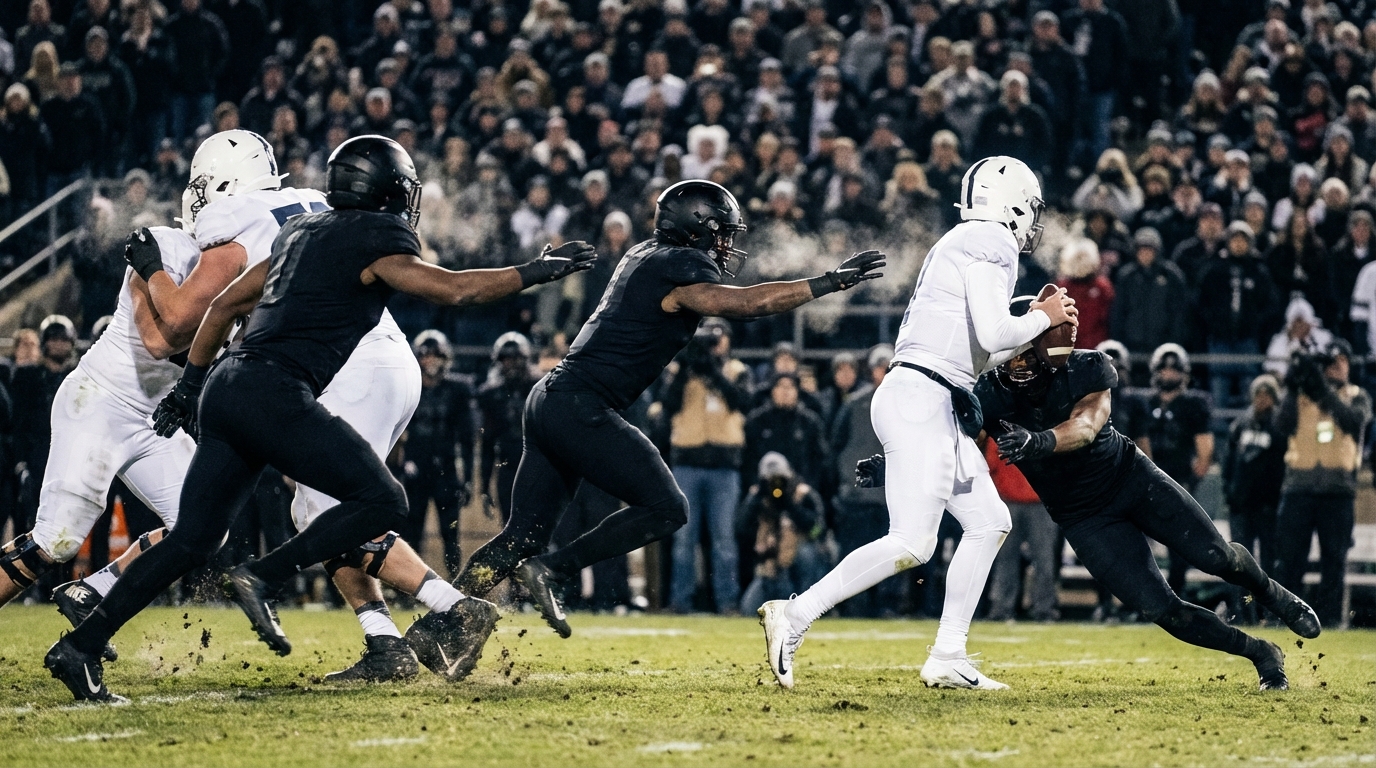
Sam Darnold shows a clear split between clean pockets and pressure. Against the 2024 Vikings under pressure he had zero touchdowns, one interception, and a 42.3 passer rating per NextGenStats. However, when the pocket held versus the 2025 Seahawks he produced four touchdowns and a 108.6 passer rating. Therefore pressure changes his efficiency dramatically.
Key pressure facts and comparisons
- Under pressure versus Vikings: 0 TD, 1 INT, 42.3 passer rating
- Under pressure versus Seahawks: 4 TD, 0 INT, 108.6 passer rating
- Darnold was sacked once in Seattle’s three losses this season, which shows protection value
- Patriots playoff defense: 8.7 points allowed per game and four sacks per game
- Patriots forced at least one turnover in each playoff game this postseason
What it means tactically
The Patriots can convert modest pressure into mistakes because Darnold’s passer rating drops sharply under duress. Moreover four sacks per game correlate to better defensive scoring outcomes for New England. As a result Patriots should stress timed rushes and disguise to create quick reads and rushed throws. That approach targets interceptions and stalled drives. Therefore they can pressure without sacrificing coverage. This balance will matter in late game situations.
| Statistic Category | Patriots Defense (Playoffs) | Seahawks Offense |
|---|---|---|
| Points Allowed Per Game | 8.7 | N/A |
| Sacks Per Game | 4 | Darnold 346 yards, 3 TDs |
| Turnovers Forced Per Game | 1+ | Darnold Under Pressure: 0 TD, 1 INT (Vikings); 4 TD, 0 INT (Seahawks) |
| Zach Charbonnet Workload | N/A | 19 carries, 62 yards (3.3 YPC) |
Conclusion
The Patriots hold a clear tactical edge when it comes to Disrupting Sam Darnold in the Super Bowl. Their postseason defense has allowed just 8.7 points per game while generating four sacks per contest. Therefore New England can shorten Darnold’s decision window and force rushed throws. When pressure lands, Darnold’s passer rating collapses, and turnovers become more likely.
Key takeaways reinforce a winning plan. First, a disciplined four-man rush and well-timed stunts turn modest pressure into sacks and hurried reads. Second, interior push from players like Milton Williams and Christian Barmore removes safe stepping lanes. Finally, linebacker and safety disguise creates interception chances while preserving coverage integrity.
Patriots Report LLC provided this tactical analysis to explain the matchup and the pathways to victory. For ongoing breakdowns, follow Patriots Report LLC online at Patriots Report LLC and on Twitter at @ZachGatsby. Moreover follow our coverage for pregame keys, in-game adjustments, and postgame film study. As a result fans will stay informed about the strategies that matter most in this Super Bowl matchup.
Frequently Asked Questions (FAQs)
What is the single most important step to disrupting Sam Darnold in the Super Bowl?
Because Darnold collapses under pressure, the Patriots must shrink the pocket and force quick decisions. A disciplined four-man rush with timed stunts works well. The Patriots averaged four sacks per playoff game and allowed 8.7 points per game, so pressure ties directly to lower scoring.
Will aggressive blitzing expose the Patriots to big plays?
However, pure blitzing can create risk if coverage fails. Therefore New England should mix disguised blitzes with safe rushes. That preserves coverage depth while creating hurried throws.
How does Seattle’s backfield availability change the plan?
With Zach Charbonnet unavailable, Kenneth Walker carries the workload. Charbonnet averaged 19 carries for 62 yards in the last game, so his absence reduces short-yardage balance. As a result Patriots can emphasize pass-rush schemes over run-containment packages.
Which Patriots defenders should fans watch?
Watch Harold Landry and K’Lavon Chaisson for edge pressure. Watch Elijah Ponder and Milton Williams for interior push. Watch Christian Barmore and Cory Durden for gap control and pocket collapse.
How do pressure and turnover creation link in game strategy?
The Patriots forced at least one turnover per playoff game. Therefore timed pressure that produces hurried reads increases interception chances. Moreover rotating fronts and attacking step-up lanes turns pressure into tangible turnovers. Fans should monitor early down scripts, third down calls, and substitution patterns for pressure signals.