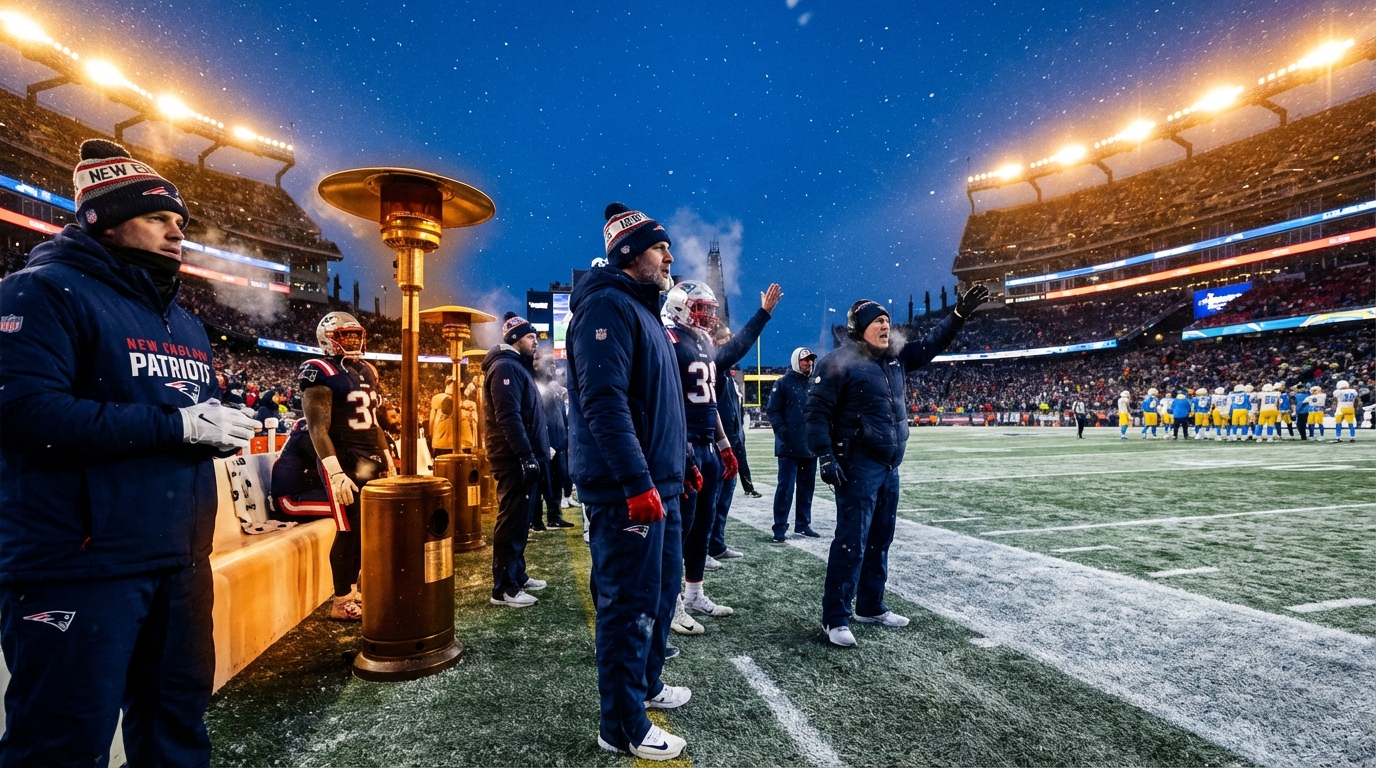
The Patriots weather advantage in playoff game vs Chargers could decide this matchup at Gillette Stadium. Optimism runs high because Foxborough fans and chilly conditions tend to favor New England’s style. The forecast calls for a daytime high near 42°F and a game time temperature around 34°F. Moreover the Chargers play under a canopy roof in Los Angeles and do not regularly face New England cold. As a result the forecast looks likely to benefit the home team on Sunday night.
Heaters will keep the bench warm, however staying ready matters every snap. Justin Herbert’s hand issue raises uncertainty for Los Angeles, which may amplify the cold’s effect. Furthermore New England’s familiarity with wind and wet conditions gives them a schematic edge. However high winds are not expected, which reduces variance in play calls and execution.
Still this game will test both teams’ ability to adapt to cold and routine disruptions. Because of home field support and the Foxborough forecast, expect smart decisions and a physical Patriots identity.
Patriots weather advantage in playoff game vs Chargers — How the forecast could swing the result
The Foxborough forecast offers a clear edge for New England. Daytime highs should top out near 42°F. Game time will fall to about 34°F, which favors the visitor from the cold. However the Patriots know how to play in it. As a result, the weather becomes another form of home-field advantage at Gillette Stadium.
Key forecast specifics
- Daytime high near 42°F and game temperature around 34°F. Therefore the surface will feel brisk by kickoff.
- High winds are not expected, so teams should not face extreme gusts.
- Benches will have heaters, but staying loose matters for readiness.
Why cold matters for matchups and strategy
Cold damages ball feel and grip, which affects throws and catches. As a result quarterbacks may lose a small edge in timing. Moreover receivers and running backs must secure the ball more carefully. Because of that, coaches often lean on shorter passing and more runs in cold weather.
Chargers adjustment factors
Los Angeles plays in an open-air stadium with a canopy roof. Consequently they rarely see consistent New England cold. Justin Herbert also deals with a hand injury, which could compound the grip issue. Therefore Herbert may face tougher conditions than in most games. The Chargers must plan for quicker snaps and heavier protection schemes.
Patriots advantages and tactical shifts
- Familiarity: Patriots practice and play in cold more often, which helps execution.
- Play calling: Expect more early runs, screens, and play action because of ball security concerns.
- Special teams: Kicking and punting grip can change distances and angles; therefore field position gains value.
- Clock management: Shorter drives may make coaching decisions more conservative, and thus New England can use time and space to its favor.
Player readiness and bench management
Heaters will reduce bench cold, but rotating players stays vital. Also depth matters late in the game, because cold saps muscle elasticity and stamina. Therefore teams that warm effectively on the sideline will limit errors.
How this affects the final outlook
Because wind is minimal, the game likely boils down to execution. However the forecast still nudges the edge to New England. With home-field advantage at Gillette Stadium and Chargers adjusting from a milder climate, the Patriots weather advantage in playoff game vs Chargers may prove decisive. For related context, see Patriots weather advantage explainer, and the Week 18 report card. Also review the playoff scenario primer.

Strategic implications of Patriots weather advantage in playoff game vs Chargers
Cold weather and home-field edge change game plans and personnel choices. Therefore coaches will adjust routines, play calls, and tempo. Moreover small differences in preparation can become decisive late in the fourth quarter.
Bench heaters and sideline management
- Benches will have heaters to prevent tight muscles and cramping. However heaters only help when players rotate often.
- Teams that stagger warmups will limit stiffness and improve readiness.
- Coaches should use shorter shifts for skill players, because cold reduces muscle elasticity and recovery speed.
How cold affects stamina and performance
Cold shortens muscle warmup windows and increases fatigue risk over long drives. As a result players expend extra energy to stay warm between snaps. Consequently coaches may emphasize conditioning and quick rotations.
- Ball security drops in cold conditions because grip and hand dexterity decline.
- Quarterbacks see slight timing disruptions, which can lead to more incomplete passes.
- Receivers and returners must focus on catch technique and strong finishes.
Impact on Chargers playing style
Los Angeles relies on rhythm and timing in the passing game. However the forecast and the canopy-roof habit mean they may face an adjustment period. Justin Herbert’s hand injury compounds the challenge. Therefore expect the Chargers to alter cadence and protect the pocket more.
- Chargers may run more quick passes and screens to limit deep shots.
- They might increase pre-snap motion to create space and timing simplicity.
- Protection schemes will tighten to give Herbert comfort on release.
Tactical shifts the Patriots can exploit
- Attack early on play-action and short passes to force misses.
- Use physical running and downfield blocking to tire opposing defenders.
- Stress special teams to win field position and capitalize on kicking variability.
A final note from the sidelines
If Bill Belichick were still in town, he would definitely be asked to his weather machine to make it as cold as possible. Still the practical edge goes to the team that executes the basics in harsh weather. Therefore home-field routines, sideline warmth, and conservative clock management could tilt the game toward New England.
| Factor | New England Patriots (Gillette Stadium) | Los Angeles Chargers (SoFi Stadium) |
|---|---|---|
| Stadium type | Open-air, traditional cold-weather venue | Open-air with large canopy roof that offers partial shelter |
| Typical home climate | Cold winters and frequent low temperatures | Mild, coastal winters; generally warmer and drier |
| Expected game temperature | Daytime high about 42°F; game-time around 34°F | Traveling team faces the same 34°F game-time temperature |
| Familiarity with cold | High familiarity; routines for cold-weather play | Low familiarity; fewer regular cold-game reps |
| Bench and sideline setup | Heaters available; established sideline rotation routines | Heaters available; less practiced cold rotation protocols |
| Key player status | No major cold-related injuries reported; home crowd support boosts energy | Justin Herbert dealing with a hand injury, which may worsen handling in cold |
| Tactical impact | Lean on physical running, short passing, clock control | Likely more quick passes, screens, and tightened protection schemes |
| Home-field elements | Crowd noise, routine, short travel for players and staff | Long travel, time zone shift, canopy familiarization required |
Final note: the table highlights clear contrasts that support the Patriots weather advantage in playoff game vs Chargers.
Conclusion
The Patriots weather advantage in playoff game vs Chargers stands as a realistic edge for New England. Forecasted game time temperatures near 34°F and Gillette Stadium routines favor the home team. Therefore cold will matter in how coaches manage the clock and calls. Moreover the mix of bench heaters, crowd energy, and short travel strengthens New England’s position.
Expectations for gameplay hinge on execution and small margins. Because Justin Herbert carries a hand injury, the Chargers may face extra handling challenges in low temperatures. As a result expect more quick passing and protective schemes from Los Angeles. Still the Patriots can exploit shorter passing, physical running, and special teams to control field position.
Patriots Report LLC will track forecast updates and tactical shifts as the kickoff nears. For ongoing coverage visit Patriots Report and follow @ZachGatsby on Twitter/X for live notes and analysis. Finally stay tuned for any weather changes, because even slight swings can reshape play calls and outcomes. Overall this matchup looks like a close test, but home-field elements and familiar cold give New England a subtle, meaningful advantage.
Frequently Asked Questions (FAQs)
Does the weather really give the Patriots an advantage?
Yes. Cold and routine favor New England. Foxborough practice time and stadium familiarity help. Because the forecast calls for a game-time temperature near 34°F, the Patriots gain an edge in execution and comfort. However the Chargers can still win with clean, quick play.
How will 42°F daytime and 34°F game-time affect gameplay?
Cooler air tightens ball feel and grip. As a result quarterbacks may rush throws and timing can slip. Therefore teams often call shorter passes and more runs. Also special teams and field position rise in importance.
Does Justin Herbert’s hand issue change the weather equation?
Yes, it amplifies handling risk. Because Herbert has a hand injury, cold may reduce his grip further. Therefore the Chargers may emphasize quick releases, screens, and extra protection to limit turnovers.
How do bench heaters and sideline routines matter?
Heaters reduce muscle tightness between snaps. Still teams that rotate players and run frequent warmups avoid cramps. In short, smart sideline management preserves stamina and reduces late-game errors.
What should fans watch for on game day?
Watch short passing efficiency, turnover chances, and special teams. Also track in-game temperature and player substitutions. Finally expect a physical, clock-managed game that tests depth, conditioning, and ball security.