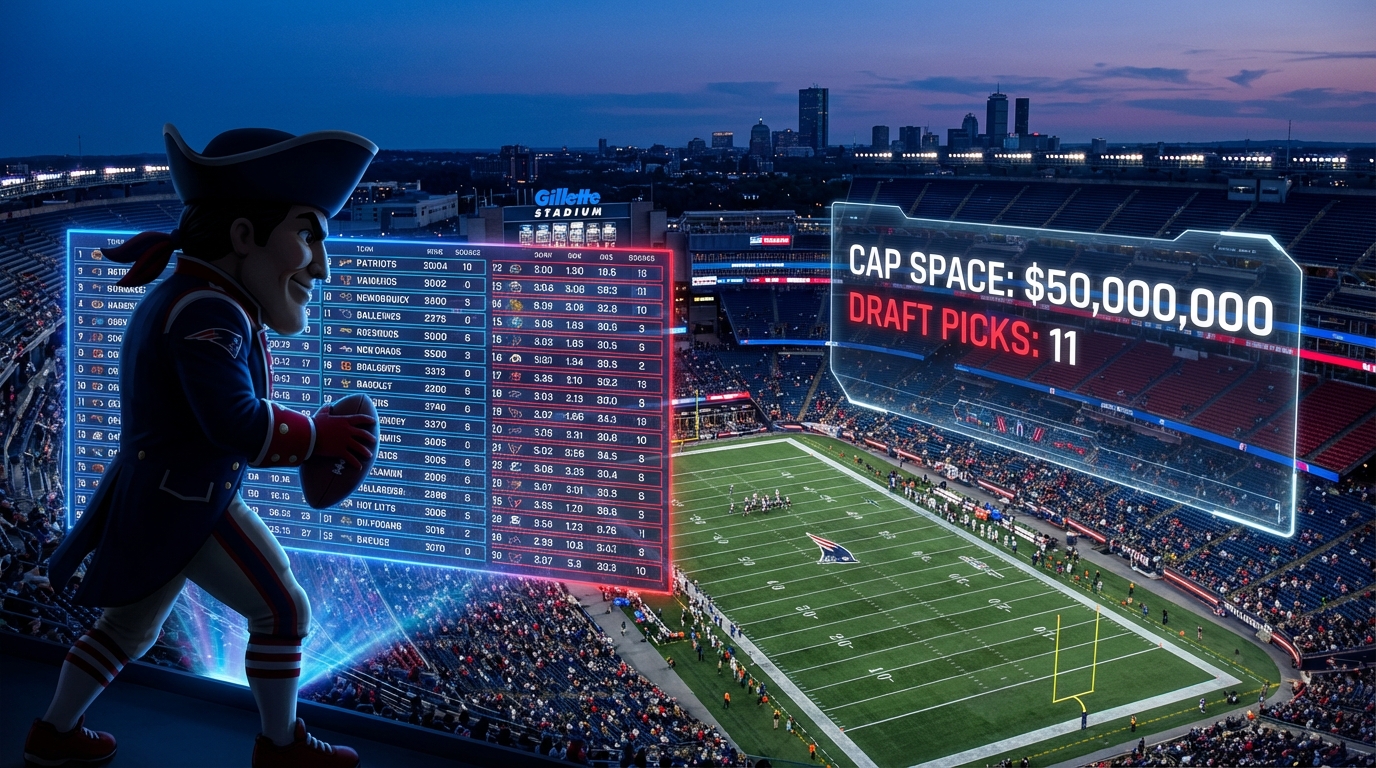
Patriots offseason predictions 2026 center on a team that now boasts promising cap space and a deep draft haul. However, fans remain skeptical about big free agent splashes. The team projects about fifty million dollars in cap space and eleven draft picks. Yet many wonder if New England will chase marquee names or add value with savvy, cheaper deals.
This preview takes a fan focused, analytical look at how those resources could shape free agency moves. As a result, the front office may prioritize positional depth over headline signings. For example, last spring’s smaller contracts helped fortify the roster without breaking the bank. However, if the market lacks star power, March could still feel disappointing to impatient fans.
We’ll weigh the cap math, the eleven draft picks, and realistic free agent targets. Then we will map scenarios that balance long term growth with immediate contention. Fans should expect cautious moves, smart bargains, and occasional boldness.
Patriots offseason predictions 2026: Cap space and 11 draft picks
The Patriots project around fifty million dollars in cap space and eleven draft picks. This financial flexibility gives New England several clear paths for the 2026 offseason. Fans should expect a cautious, value driven approach. However, the team can also swing for immediate upgrades if the right trade appears.
Key ways the cap space and picks can shape strategy
- Preserve and reload with draft capital because eleven selections let New England target multiple needs. Drafting depth reduces pressure to overspend in free agency.
- Use cap space for targeted veterans because fifty million lets the Patriots sign mid tier starters. Therefore they can add experience at edge, receiver, or tackle. This fits a model of smaller, high impact deals.
- Trade down or bundle picks because the Patriots can trade draft capital for a proven starter. As a result, they could upgrade a position without crippling future flexibility.
- Lease short term contracts and retain long term control because a mix of one and two year deals keeps cap options open. This matters with Drake Maye still on a rookie contract.
- Pursue bargain free agents and developmental players because last year’s K’Lavon Chaisson, Khyiris Tonga, and Mack Hollins deals paid off. In contrast, blockbuster splashes may not exist in this class.
Strategic scenarios to watch
- Contention first scenario: Spend to add a starter, then draft developmental pieces. This risks future cap strain, but could push a deep playoff run.
- Long term build: Focus on rookies and bargains, preserving cap for next year. This limits immediate star power, but sustains depth and fiscal health.
Overall, Patriots offseason predictions 2026 should stress balance. New England’s cap room and eleven picks let the team be flexible, prudent, and occasionally aggressive.

Patriots offseason predictions 2026: Free agency landscape and key names
Andrew Callahan warns that the 2026 free-agent class lacks star power, and that caution will shape roster moves. As a result, Patriots decision-makers may favor high value over headline signings. However, the market still contains useful veterans and tradeable starters who fit New England’s approach.
Why the class matters to the Patriots
- Alec Pierce emerges as one of the better receivers available, yet he has never posted a 1,000-yard season. Therefore he represents upside without proven elite production, and New England could pursue him as a buy low option. See broader season context here: link.
- Drake Maye remains on a rookie contract, so the team can prioritize complementary pieces. Consequently, the front office might add blocking, pass catchers, or edge depth rather than chase a veteran quarterback.
- Hendrickson represents the sort of big name fans talk about, but top talents often re-sign or move via trade before free agency. As a result, the Pats may not find game-changing stars on the open market.
Smaller signings that pay off
- New England found value last spring with K’Lavon Chaisson, Khyiris Tonga, and Mack Hollins. Those smaller deals fortified depth and trimmed risk. Therefore replicating that model fits the team’s cap around fifty million and eleven picks.
- The team can target mid-tier starters on one or two year pacts. This keeps flexibility and avoids long term cap strain. For more on potential roster shifts, consider this deeper trade discussion: link.
Practical strategy
- Prioritize fit over flash, because role players can unlock Drake Maye and the current roster.
- Use draft capital to complement modest free-agent adds.
Fans may feel skeptical, but a mix of strategic bargains and smart drafting could produce real gains. For further season forecasting, check this Patriots predictions roundup: link.
Patriots offseason predictions 2026 Free agent and draft comparison
| Player or Asset | Contract status | Perceived impact | Fit with Patriots strategy |
|---|---|---|---|
| Alec Pierce, Colts | Expected to hit free agency, upside with question marks | Moderate immediate receiver boost, upside but inconsistent | Buy low target, ideal for a one or two year deal to complement Drake Maye |
| K’Lavon Chaisson | Signed last spring to a short term deal | Rotational edge rusher who added pressure and depth | Low risk, high reward signing that fits New England’s value driven model |
| Khyiris Tonga | Signed last spring to a short term deal | Interior defensive lineman who improved run defense | Adds depth and fits savvy roster building that values fit over flash |
| Mack Hollins | Signed last spring to a short term deal | Versatile pass catcher and special teams contributor | Role player who delivers immediate value while preserving cap flexibility |
| Draft picks, eleven selections | Team controlled rookie contracts and trade chips | High upside across multiple positions, cost controlled | Core of long term building, and a tool to trade for proven starters when needed |
Table notes
- The table compares headline targets and known value signings. Therefore it highlights how cap around fifty million and eleven picks creates flexibility.
- As a result, New England can mix mid tier veteran deals with rookie driven depth to pursue contention now and sustain long term health.
CONCLUSION
The Patriots enter the offseason with cautious optimism. They have about fifty million in cap room and eleven draft picks, and that mix supports multiple paths to improve. Andrew Callahan warns the 2026 free agent class lacks star power, and his view tempers expectations. Meanwhile, Mike Vrabel’s focus on process and fit aligns with a patient, detail oriented roster plan.
Therefore New England will likely chase value and role players instead of headline splashes. Small, smart signings and draft development replicate last spring’s success with K’Lavon Chaisson, Khyiris Tonga, and Mack Hollins. As a result, the team remains resilient and well positioned to contend now while building for the future.
For continuous coverage and insider updates visit patriotsreport.com and follow @ZachGatsby on Twitter/X for real time news and analysis.
Frequently Asked Questions (FAQs)
What is the Patriots’ cap space for 2026?
The Patriots are projected to have around $50 million in cap space for 2026, providing significant flexibility for free agency and trades.
Who are the key free agents to watch for 2026?
Key targets include Alec Pierce, a promising receiver, and Hendrickson among others. However, Andrew Callahan notes the lack of star power in this year’s class.
How many draft picks do the Patriots have in 2026?
The Patriots have eleven draft picks, which they can use to address various team needs or trade for established players.
How will free agency impact the Patriots?
Given the limited star power in the free agent pool, the Patriots are likely to focus on smaller, strategic signings. This approach would mirror past successes with players like K’Lavon Chaisson and Mack Hollins.
What does Andrew Callahan say about the 2026 offseason?
Andrew Callahan predicts a cautious offseason, emphasizing smart, value-driven moves due to the free-agent class’s lack of marquee signings.